Global Platforms Reshape Culture Without Understanding Its Origins

In an age where digital platforms act as the cultural mainstage for billions worldwide, a troubling pattern has emerged: global content systems increasingly borrow cultural expressions without context, meaning, or respect. This pattern is more than a social media trend or an art world controversy — it is part of a broader, structural issue in the way cultures interact through technology. Historically, cultural exchange has been a constant feature of human societies, shaped by trade routes, migration, diplomacy, and conflict. But today’s digital spaces accelerate cultural movement at unprecedented speed, often detaching objects, languages, music, fashion, and traditions from their originating communities. When this happens without genuine understanding or engagement, it can resemble a form of cultural colonization — not through territorial conquest, but through the dominance of narratives and representations. This phenomenon becomes especially acute when content created by marginalized communities is reshaped, reused, or monetized by platforms and creators far removed from its original context, subtly reinforcing existing global inequalities.
The term “cultural appropriation” — defined as the adoption of cultural elements in ways that can be seen as disrespectful or exploitative — now often frames these conversations online. While not all borrowing is inherently inappropriate or exploitative, the core ethical concern arises when dominant cultures take from marginalized groups without proper acknowledgment, understanding, or reciprocal benefit. Digital platforms, with their global reach and algorithmic incentives, can amplify these dynamics. In practice, that looks like a viral dance originating in a specific community being stripped of its meaning, or native symbols used in marketing campaigns without credit to the cultural tradition that gave them life. These aren’t isolated incidents but reflections of deeper power imbalances embedded in global media infrastructures, where the voices and histories of less dominant communities are often eclipsed.
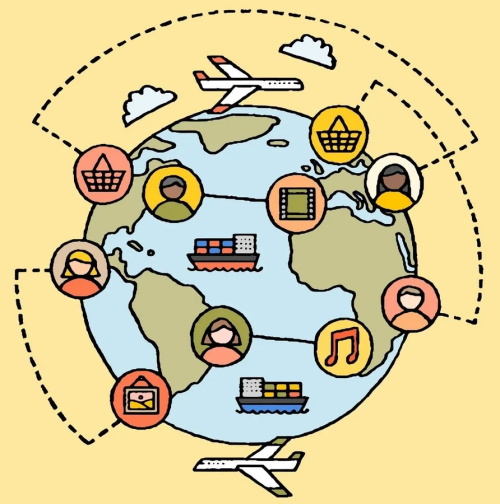
What distinguishes this modern “content colonization” from historical cultural borrowing is the scale and speed of digital dissemination. Ideas and artifacts traverse global timelines in seconds, but the cultural frameworks that give them significance do not always travel with them. When platforms of immense cultural power — particularly Western-dominated social networks and media giants — are the conduits of this exchange, the risk grows that context collapses entirely. Global audiences experience a reduced, sometimes stereotyped version of another culture that reinforces existing hierarchies rather than fostering genuine understanding. In this landscape, seemingly innocuous acts of content sharing can inadvertently echo broader patterns of cultural dominance and erasure.
Platforms, Power, and the Ethics of Global Cultural Exchange
The influence of digital platforms in shaping cultural perception is far from neutral. Scholars describe the phenomenon of platform imperialism as the asymmetrical power exerted by dominant technology firms — primarily based in Western economies — that mediate much of the world’s cultural and informational flow. Through data-driven recommendation systems, global audiences are introduced to a curated version of cultural content that often reflects dominant cultural values and aesthetics, sidelining locally grounded voices.
This dynamic is compounded by the economic incentives built into most social and media platforms. Popularity algorithms favor content that is already widely consumed, incentivizing creators to produce variations of familiar cultural signals rather than foregrounding authentic narratives from diverse sources. The result is a feedback loop in which a limited set of cultural styles, languages, and expressions dominate the global feed, while others remain peripheral. In effect, cultural representation becomes a competitive marketplace rather than a shared space of mutual enrichment.

These structures do more than reward certain types of content — they shape how audiences around the world imagine different cultures. A viewer in one part of the globe may form their idea of another culture from millions of snippets of decontextualized media, while the originating culture’s own voice struggles to be heard in meaningful ways. This raises fundamental ethical questions about cultural agency and ownership in a world where media platforms wield enormous influence over collective imagination. When creators from dominant contexts reframe or repurpose elements from less dominant ones without reciprocal visibility or agency, it resembles an extractive process more than a dialogical one.
Still, not all cultural exchange is exploitative, nor is all digital borrowing inherently harmful. Many communities actively engage with global audiences, using digital tools to tell their own stories and share their traditions with pride and intention. However, the danger lies in when these stories are silenced, repackaged, or removed from their originating context, with no credit given and little understanding shared. Such outcomes erode cultural diversity rather than celebrating it, transforming complex traditions into superficial aesthetics.
The conversation around cultural appropriation and digital culture also intersects with debates about authenticity, ownership, and the ethics of engagement. Some critics argue that cultural exchange is inevitable and that culture has always evolved through contact and borrowing. Yet this perspective can overlook the significant inequalities in power and representation that distinguish historical cultural interaction from today’s globalized media environment. Respectful cultural engagement requires not just consuming with curiosity, but also recognizing histories, acknowledging contexts, and sharing platforms with the voices that originated the cultural expressions being shared.
About the Author:
Alexis Tran is a cultural media strategist and writer whose work explores the intersection of technology, globalization, and representation. With over a decade of experience in digital communications and cultural critique, Alexis has contributed to leading journals and cultural outlets on topics ranging from media ethics to cross-cultural collaboration. They hold a Master’s degree in Media and Cultural Studies, and have advised global arts organizations on inclusive storytelling in the digital age. Through research and commentary, Alexis advocates for equitable cultural exchange and nuanced understanding in an interconnected world.
References:
Alsaleh, A. (2024). The impact of technological advancement on culture and society. Scientific Reports, 14, Article 32140.
Duggal, A. (2025). Cultural appropriation vs. appreciation: The impact of globalization on fashion trends. Indian Journal of Fashion Technology, 2(1).
Salsabila, K. (2021). Netflix: Cultural diversity or cultural imperialism? Rubikon : Journal of Transnational American Studies, 8(1).
Cruz, A. G. B. & Scaraboto, D. (2024). Between cultural appreciation and cultural appropriation: Self-authorizing the consumption of cultural difference. Journal of Consumer Research, 50(5), 962–984.
Kawamura, Y., & de Jong, J. M. (2022). Cultural appropriation in fashion and entertainment. Bloomsbury Visual Arts.
Strangelove, M. (2005). The Empire of Mind: Digital piracy and the anti-capitalist movement. University of Toronto Press.
S. Kolawole Balogun & E. Aruoture. (2024). Cultural homogenization vs. cultural diversity: Social media’s double-edged sword in the age of globalization. ResearchGate.