Anxiety Is Deeply Shaped by Rapid Social Change and Modern Life Patterns

The Social Terrain of Anxiety
Anxiety, and especially social anxiety, is often understood narrowly as a clinical condition characterised by fear of scrutiny, negative evaluation, and avoidance of social situations. Yet, when we situate it within broader patterns of social transformation—economic upheaval, technological reconfiguration, shifting norms of communication and community engagement—it becomes clear that this phenomenon is deeply tied to the structure of contemporary life. Research shows that social anxiety varies across contexts and over time: even general anxiety in the U.S. has increased markedly among adults under 50 over recent decades, with young adults showing especially rapid rises, reflecting broad societal stress exposures and environmental pressures rather than discrete individual vulnerabilities alone. The social environment shapes emotional well-being before it shapes mood disorders, suggesting that alterations in the very fabric of our everyday lives are likely reflected first in anxiety patterns.[1]
A core sociological concept that helps frame these trends is social acceleration—a theory proposed by Hartmut Rosa to describe the frenetic pace of change in late modern societies. Rosa argues that advancements in communication, transportation, and economic systems have produced an “abstract time” characterised by constant transformation and shrinking intervals of stability. In such a temporal regime, expectations of continuity erode, individuals experience pressure to adapt ever more quickly, and ordinary rhythms of life are destabilised. This relentless pace doesn’t only affect how quickly we accomplish tasks; it impacts how we relate to others, how we envision our identities, and how we feel in social environments where norms are continually in flux and anticipations of others’ reactions are ever more complex.
In this accelerated social context, even routine interactions can feel laden with uncertainty. Ambiguity about cultural norms (e.g., what constitutes appropriate behaviour in a digital interaction versus an in-person conversation) can amplify discomfort.
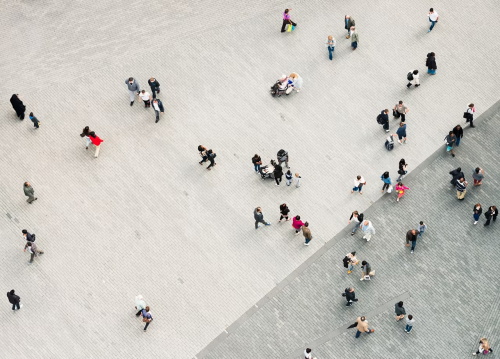
With social customs continually evolving—under the influence of global connectivity, transient work relationships, and rapid shifts in social expectations—people struggle not just with intense social situations, but with the very uncertainty of the social scripts they are expected to follow. It is precisely this ambiguity, born of rapid social change, that contributes to heightened social anxiety in many individuals.
Psychological and Social Dynamics of Anxiety in Contemporary Life
From the perspective of psychology, social anxiety can be conceptualised not simply as a fear response, but as a dynamic interplay between individual cognition and changing social contexts. Laboratory and real-world studies show that socially anxious individuals don’t just feel nervous; they systematically respond to the very cues of the social environment that signal potential evaluation or judgment. For example, individuals with high levels of social anxiety report worsened mood in daily life when they spend less time with close companions, and these emotional patterns are intertwined with how social support networks function. [2] This suggests that fluctuating social circumstances—such as reduced in-person contact due to remote work or global disruptions—can have substantive effects on affective states associated with anxiety.
Cognitively, the way people process social information also matters. Classic research on social phobia found that the framing of social cues—whether cues highlight potential positive outcomes or emphasize absence of negative outcomes—changes predictions of anxiety in future interactions. This underscores how cognitive interpretations of the same social setting can produce widely divergent emotional responses, implying that rapid changes in the social environment may magnify existing cognitive sensitivities. Moreover, perceived social isolation—linked with both social anxiety and broader anxiety disorders—has been shown to be one of the most consistent predictors of lifetime anxiety outcomes.[3] In times characterised by fluctuating community ties, fragmented social networks, and profound demographic shifts, both subjective and structural isolation feed into anxiety pathways.
The socio-cultural environment also exerts directional influences on how social anxiety manifests. Cultural norms that prioritize social performance, status maintenance, and hyper-visibility (common in many competitive and technologically saturated societies) effectively elevate social evaluation pressures. These pressures are not distributed evenly; they intersect with factors such as gender, socioeconomic status, and age, creating layered vulnerabilities. Digital platforms amplify such pressures through mechanisms like context collapse, where multiple social audiences converge in a single space, forcing individuals to anticipate and navigate diverse evaluative perspectives simultaneously—an experience consistently associated with heightened anxiety about imagined surveillance and judgment.
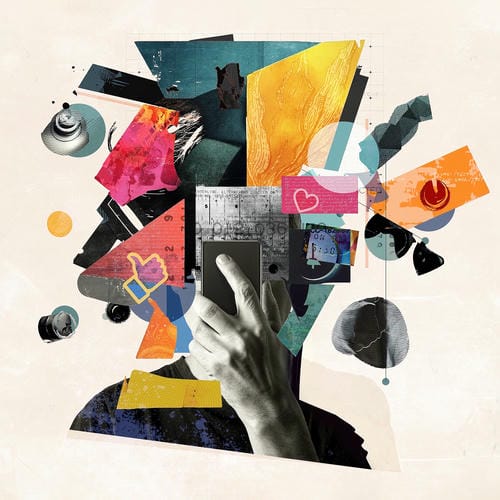
Rapid social change also reframes what it means to belong to a community and to engage meaningfully with others. Against a backdrop of shifting norms, young people, in particular, encounter a disjunction between evolving cultural expectations and their own social identities. Research on trends in mental health suggests that rising prevalence of anxiety in younger cohorts may be partly attributable to these heightened social stressors, which encompass economic uncertainty, educational competition, digital immersion and unstable relational worlds.[4]
Culturally, the meanings attached to mental health and help-seeking also change. Norms about stigma, therapeutic engagement, and support networks evolve, influencing not just how people experience anxiety but how they interpret it. Cultural contexts can either buffer anxiety through robust social support systems and collectivist traditions, or exacerbate it in individualistic settings where self-reliance is prized and emotional distress is minimised.
Even deeper than situational stressors or cognitive interpretations lies the evolutionary substrate of social anxiety: humans evolved in tightly knit social groups where social standing and acceptance were vital for survival. Contemporary society retains these deeply rooted social selection mechanisms, but overlays them with complex, high-stakes evaluative environments that often exceed our ancestral social capacities. [5] While evolutionary explanations do not fully account for anxiety in today’s world, they illuminate why social changes that heighten status competition and vivid social comparisons have profound psychological consequences.
The Broader Cultural Implications of Anxiety in Social Change
Understanding social anxiety through a cultural and societal lens reveals a key insight: social anxiety is not simply an individual pathology, but a relational experience shaped by collective uncertainties and changing social architectures. In periods of rapid societal change—whether due to globalization, technological innovation, political volatility, or public health crises—norms and expectations shift faster than individuals’ capacities to adapt. This temporal compression of social expectations produces emotional stress that materialises first in anxiety before other forms of psychological distress emerge.
Social acceleration theorists argue that the contemporary condition is one marked by constant motion: individuals and institutions alike struggle to keep up with the pace of change, leading not to meaningful progress, but to a sense of inertia masked by frenetic activity.3 In such an environment, building and sustaining deep, resonant social ties becomes increasingly difficult, contributing to alienation and anxiety. The paradox of this era is that although we are more technically connected than ever, the qualitative depth of social relations and the stability of social structures have weakened, heightening psychological strain.

In this accelerated social milieu, social anxiety becomes a barometer of how individuals are coping with the broader pressures of modern life. Anxiety signals not only immediate fears about social judgment but also deeper experiences of unpredictability, loss of control, and fragmented community ties. It reflects how individuals perceive their place in a rapidly changing world—a world where the criteria for belonging, success, and acceptance are continually being redefined.
About the Author:
Elias Romero is a clinical psychologist and sociocultural researcher who investigates how rapid social change shapes mental health and human behavior. With expertise in anxiety disorders, social cognition, and the psychology of modern life, he explores the intersections of technology, community, and cultural norms, examining how evolving social structures influence emotional well-being. Dr. Romero combines empirical research with sociological insight to illuminate how contemporary pressures—from digital connectivity to accelerated social rhythms—impact individual and collective experiences of anxiety.
Sources:
[1]: Twenge, J. M., Gentile, B., & Joiner, T. E. (2020). Trends in anxiety among adults in the United States, 2008–2018: Rapid increases among young adults. Journal of Anxiety Disorders.
[2]: University of Pennsylvania School of Arts & Sciences. (2025). SAS sociology course exploring anxiety and social change.
[3]: Sasaki, N., & Others. (2019). Journal of Psychiatric Research. PubMed.
[4]: Smith, J., Lee, A., & Kumar, R. (2024). Patterns of health behavior and anxiety in public health populations. BMC Public Health, 24.
[5]: Haugan, T. (2023). Social anxiety in modern societies from an evolutionary perspective. Discover Psychology, 3, 12.
Reference:
National Library of Medicine. National Center for Biotechnology Information (2001). Culture counts: The influence of culture and society on mental health.