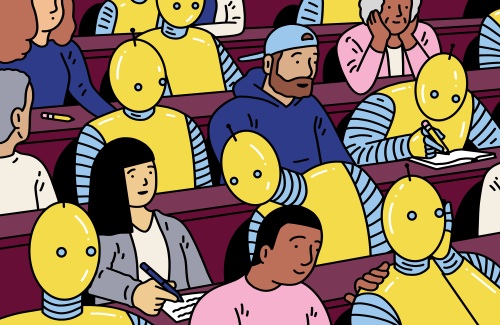
How Big Data Forecasts What We’ll Love Next?
Every tap, click, and scroll leaves a trace—our digital footprints. These traces are more than just byproducts of online life; they are the raw material of a new scientific frontier where Big Data helps forecast what individuals and societies will like next. This transformation of everyday interactions into predictive information stems from a broader trend called datafication—the process of turning life into quantifiable data that can be analyzed and modeled for insight and value creation . Our collective behaviors—what we watch, buy, post, and even search—are now part of vast datasets that feed into machine learning models and predictive algorithms capable of revealing patterns too complex for unaided human cognition.
The Hidden Patterns in Our Digital Lives
On platforms like Netflix, Amazon, and Spotify, these predictive systems are already shaping our consumption habits in powerful ways. Netflix’s recommendation engine analyzes mountains of data about viewing behaviors—what we watch, when we watch, and how we interact with content—and uses algorithms to suggest what we’re most likely to enjoy next. Studies indicate that such personalized recommendations significantly increase viewer engagement and retention, allowing platforms to tailor content experiences in near real time based on individual behaviors and preferences . Similarly, Amazon’s system collects purchase histories and browsing patterns to anticipate products we might want, dynamically adapting recommendations and even pricing to match predicted demand.
This predictive capability extends beyond entertainment and ecommerce into broader social understanding. For example, research in trend forecasting and topic discovery explores how patterns in textual data can indicate emerging interests and cultural shifts before they become mainstream.

Techniques like association analysis and ensemble forecasting can identify not only current topics of interest from large corpora of text but also project which themes will gain or lose prominence in the near future. By treating the prominence of specific topics as time series data, researchers can extrapolate those trajectories to anticipate what subjects might capture public attention next . The implications for marketers, creators, and policymakers are profound: Big Data does not merely record what has been but gives clues about what will be.
These forecasting methodologies leverage a blend of machine learning, statistical modeling, and network analysis. In recommendation systems, approaches like collaborative filtering and matrix factorization enable models to detect latent patterns in user behavior, clustering similar users or items and predicting preferences based on these connections . Beyond individual recommendations, temporal network models show how user interactions with content over time can forecast broader trend shifts—suggesting which movies, products, or ideas will rise in popularity based on evolving interaction patterns across platforms.
Whether for commercial applications or academic inquiries, the capacity to convert raw digital signals into future-oriented predictions marks a paradigm shift in how we understand human preferences.
Societal Trends and the Cultural Forecast
The role of Big Data in predicting cultural trends is not confined to commercial personalization; it also intersects with how societies collectively evolve. Digital footprints, when aggregated at massive scales, reveal broader patterns of collective attention and behavior. Researchers in fields like culturomics analyze millions of text sources to detect shifts in language usage, topic prevalence, and cultural sentiment, uncovering trends that reflect changing social values and interests. These large-scale cultural analyses have even retroactively anticipated major social movements by detecting subtle shifts in how narratives evolve across public discourse.

Predictive analytics is increasingly applied to understand phenomena like virality and diffusion across social networks, where trends can emerge rapidly and unpredictably. Algorithms that mine social media content, images, and user interactions are now capable of detecting early signals of trending topics or cultural shifts, sometimes before these ideas become visible through traditional reporting channels. This kind of foresight is invaluable for cultural institutions, advertisers, and political actors alike. For example, anticipatory analytics—an approach where systems predict future behavior and adjust in real time—is already used in domains as diverse as ride-sharing, where platforms forecast demand patterns and allocate resources accordingly, and content markets, where trend detection tools help creators tailor offerings ahead of peak interest .
Beyond purely predictive models, these methods raise important sociological questions. As we increasingly rely on algorithmic forecasting, we embed certain assumptions about human behavior into the tools we build. The very act of prediction can influence the outcomes it aims to anticipate. When a platform’s recommendation engine amplifies particular content because it predicts high engagement, it can create self-fulfilling prophecies where predicted trends are reinforced by algorithmic preference. This interplay between human agency and algorithmic influence complicates how we define authenticity in cultural consumption. The patterns we see in mass data are, in a sense, co-constructed by users and systems interacting in feedback loops that blur the line between forecasting and shaping trends.
Questions also arise around the social implications when these predictive capabilities extend beyond commercial realms into public policy and social governance. While early research promised that Big Data could improve decision-making across sectors—ranging from economic planning to health care—critics have cautioned that predictive power also carries risks of bias, privacy invasion, and systemic misinterpretation if models are misapplied or opaque . As Big Data becomes more integrated with artificial intelligence and machine learning, the models that predict individual and collective preferences can shape not only consumer experiences but also social norms and political discourse.

Despite these concerns, the integration of predictive analytics into our digital ecosystem continues to accelerate. Market analyses suggest that investment in Big Data technologies and analytics will grow significantly in the coming years, driven by the demand for more refined insights and real-time decision-making tools. As data sources continue to proliferate through social platforms, IoT sensors, and user interactions, the potential to detect nuanced patterns and anticipate shifts in cultural trends will only expand. For content creators, marketers, and social scientists, these tools offer unprecedented access to the rhythms of popular culture and individual attention.
Ultimately, forecasting trends from digital footprints is reshaping how we understand preferences—not as fixed or purely subjective, but as dynamic patterns emerging from the interplay of millions of discrete interactions. The algorithms that mine these patterns offer both practical applications and philosophical provocations: while they reveal what we are likely to engage with next, they also highlight how deeply our digital lives are woven into the predictive architecture of our cultural future.
About the Author:
Avery L. Sinclair is a data strategist and cultural analyst whose work sits at the intersection of technology, society, and digital behavior. With over a decade of experience in big data analytics, machine learning, and trend forecasting, Avery has led data science teams at leading tech firms and consulted for global media and consumer research organizations. Their expertise includes designing predictive models that translate complex digital footprints into actionable insights about human preferences and cultural shifts—work shaped by deep engagement with both academic research and real-world applications in platforms that leverage recommendation systems and predictive analytics (e.g., streaming services, social media, and e-commerce ecosystems).
Avery holds a Master’s degree in Data Science and Social Analytics and has published extensively on topics ranging from algorithmic culture to ethical forecasting. They are a frequent speaker at industry events on the future of personalization and data-driven creativity, blending rigorous quantitative training with a humanities-inflected understanding of culture and society.
References:
Anderson, J., & Rainie, L. (2012). The future of Big Data. Pew Research Center.
Topic discovery and future trend forecasting for texts. (2016). Journal of Big Data.
Big Data Analytics News. (2026). Top 20 Big Data Trends and Predictions to watch in 2026.
McKendrick, J. (2024). My one big tech-fueled prediction for 2025: Big Data is back. Forbes.
Recommended for you