AI Evaluation Must Include Cultural Complexity to Be Truly Effective

Artificial intelligence benchmarks—the standardized tests used to evaluate how well models “understand” aspects of human behavior—have become deeply entrenched in the development cycle of modern AI systems. These benchmarks primarily rely on quantifiable tasks such as factual recall, translation accuracy, or pattern-based reasoning. By nature, such metrics excel at measuring performance in well-defined, narrow tasks but fall short when it comes to the nuances of human culture. Emerging research shows that culture is not a set of static facts or lists of localized customs that can be input or output like any other data point.
Why Traditional AI Benchmarks Fall Short
Anthropologists have long emphasized that culture is dynamic, historically situated, and enacted in practice—not merely a sum of national stereotypes or simplified numeric measures. When AI benchmarks reduce culture to easily parameterizable categories, they mask the true complexity of lived human experience and thereby teach artificial systems none of the rich, contextual understanding that makes culture meaningful. In essence, the cultural competence of AI is frequently evaluated through lenses that strip away the very cultural dynamics that define human meaning-making. Benchmarks that treat countries as monolithic cultural containers or assign discrete scores to culture-specific knowledge risk encoding reductive, essentialized ideas about how people think, interpret, and act. This reductive framing is at best an approximation and at worst a distortion of culture itself. Humans navigate social worlds through subtle interplay of history, language, norms, values, ritual, and context—dimensions that do not lend themselves easily to multiple-choice formats or list-based tests but rather require observation, interpretation, and participation. Current work suggests that without a fundamental rethinking of evaluation design, AI systems will continue to fall short of respectful, culturally competent performance because they are trained and tested against models of culture that bear little resemblance to culture as lived and experienced.

This mismatch matters: when AI interfaces interact with diverse communities—whether in education, governance, healthcare, or everyday digital life—the consequences of cultural misinterpretation can range from awkward to harmful. What constitutes a polite conversational turn, a valid ethical judgment, or an appropriate social response varies widely across groups and contexts—factors that superficial benchmarks cannot capture. A deeper integration of culturally nuanced frameworks in evaluation pushes AI research beyond simply scoring higher on standardized tests toward models that can sensitively adapt to cultural diversity in practice.
The Case for Anthropological Insight in AI Evaluation
Anthropology—the study of human societies, cultural practices, and symbolic systems—offers critical tools for reevaluating how we define cultural competence in AI. Instead of measuring culture as static metadata, anthropological approaches emphasize context-sensitive interpretation, narrative depth, and the social practices through which culture is enacted. These methods favor qualitative insights, ethnographic observation, and an appreciation of cultural diversity that cannot be reduced to isolated data points. A notable example is the argument that AI benchmarks should incorporate real-world narratives and scenarios rooted in actual cultural experience, rather than abstract quizzes or artificial assessments. By involving members of cultural communities in the design, annotation, and validation of evaluation protocols, researchers aim to produce benchmarks that reflect the lived complexity of cultural norms, preferences, and behaviors. This involves interdisciplinary collaboration between computer scientists and social scientists—a melding of technical rigor with deep cultural insight. In practice, an anthropologically informed benchmark might assess an AI model’s ability to navigate culturally situated dilemmas, interpret situational cues in culturally diverse settings, or generate contextually appropriate social responses. Such assessments would move far beyond rote memorization of cultural trivia and toward evaluating models based on responsiveness, interpretive richness, and sensitivity to local nuances. In addition, anthropology highlights the importance of recognizing within-culture diversity; not all individuals within a cultural group share identical beliefs or practices, and this intragroup variation can be as significant as the differences between groups. A benchmark that treats culture as uniform will invariably erase important differences in values, experiences, and expressions.
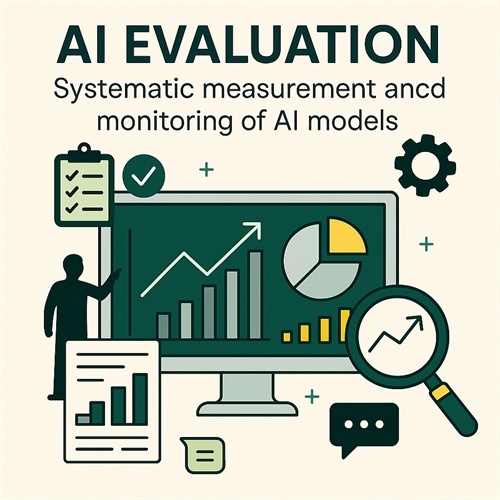
Anthropological insights also encourage reflection on power, bias, and ethical representation in AI evaluation: which voices are centered in benchmark creation, which perspectives are marginalized, and how do evaluation outcomes reinforce or challenge existing inequities? Redesigning benchmarks to address these questions challenges the default assumption that culture can be evaluated independently of its social and political contexts, and instead treats cultural competence as a relational and negotiated capability. The goal is not an AI that can merely regurgitate culturally specific facts, but one that can demonstrably engage with cultural complexity in ways that respect diversity and adaptability.
Rethinking AI Evaluation for a Culturally Complex Future
The call for culturally sensitive AI evaluation represents a broader shift in how we envision the role of AI in society. Rather than viewing AI systems as neutral computational engines evaluated solely on technical performance measures, this emerging paradigm sees them as social actors embedded within cultural networks. This perspective demands benchmarks that account for context, assess responses in situational detail, and measure adaptability rather than rigid correctness. For example, when an AI assistant offers suggestions to users from different cultural backgrounds, its success should not be gauged merely by accuracy of translation or topic recall but by its ability to engage respectfully with cultural norms, adapt communication style appropriately, and recognize potential cultural sensitivities. Likewise, in cross-cultural settings such as international education or global health, culturally responsive AI must be evaluated for its capacity to support dialogue, mediate misunderstandings, and contribute to equitable outcomes rather than inadvertently imposing dominant cultural frames. To achieve this, researchers are proposing frameworks that integrate qualitative, context-rich evaluation alongside quantitative metrics.
These hybrid approaches recognize that benchmarks must be multidimensional, capturing not just what a model knows but how it applies that knowledge in culturally contingent interactions. They also highlight the need for participatory design processes in which cultural communities contribute to defining the criteria that matter most to them—criteria that often extend beyond narrow conceptions of correctness to include empathy, ethical awareness, and social understanding. Ultimately, embedding cultural complexity into AI evaluation aligns the technology more closely with the complex realities of human life, fostering systems that are more adaptable, inclusive, and useful across diverse cultural contexts. Such a reorientation transforms the benchmark from a static yardstick into a dynamic tool for guiding AI development toward greater cultural competence and social responsibility.
About the Author:
Alexis Darrow is a cultural technology writer and interdisciplinary researcher exploring the intersections of human society, artificial intelligence, and cultural dynamics. With a background in sociocultural anthropology and computational ethics, they have worked with global research institutions to integrate qualitative cultural insights into emerging AI evaluation frameworks. Their work has appeared in academic journals and cultural critique platforms where they investigate how AI reshapes human experience across diverse contexts, emphasizing participatory and inclusive approaches to technology development.
Reference:
AlKhamissi, M., Xiao, Y., AlKhamissi, B., & Diab, M. (2025, October). Hire your anthropologist! Rethinking culture benchmarks through an anthropological lens. arXiv.
Zhang, X., Zhang, P., Luo, S., Tang, J., Wan, Y., Yang, B., & Huang, F. (2025, September). CultureSynth: A hierarchical taxonomy-guided and retrieval-augmented framework for cultural question-answer synthesis. arXiv.
Mukherjee, A., & Ghosh, S. (2025, August). Toward socially aware vision-language models: Evaluating cultural competence through multimodal story generation. arXiv.
Orlowski, E. J. W., Norhashim, H., & Koh Ly Wey, T. (2025, September). “Too much alignment; not enough culture”: Re-balancing cultural alignment practices in LLMs. arXiv.
Lee, H.-S., Chang, C.-C., Chen, C.-Y., & Hsu, Y.-H. (2025, November). Evaluating cultural knowledge processing in large language models: A cognitive benchmarking framework integrating retrieval-augmented generation. arXiv.
Cultural adaptability benchmarks. (2025, October). In Emergent Mind.
Cultural awareness in AI: Assessing multimodal models. (2025, July). SciSimple.