Today’s Teenagers Experience Adolescence Very Differently Than Past Generations
To understand how today’s teenagers differ from those of past generations, it is necessary to begin with the social environment in which adolescence now unfolds. While every generation grows up amid change, the pace, scale, and intimacy of contemporary transformation are historically striking. Previous cohorts experienced societal shifts in discrete episodes—such as economic downturns or cultural revolutions that punctuated otherwise stable daily life. By contrast, today’s teenagers live in an environment of continuous and overlapping change. Technological innovation, cultural norms, educational pressures, economic uncertainty, and global crises evolve simultaneously, shaping adolescence as a period defined less by continuity and more by permanent adaptation.
Growing Up in a Radically Altered Social Environment
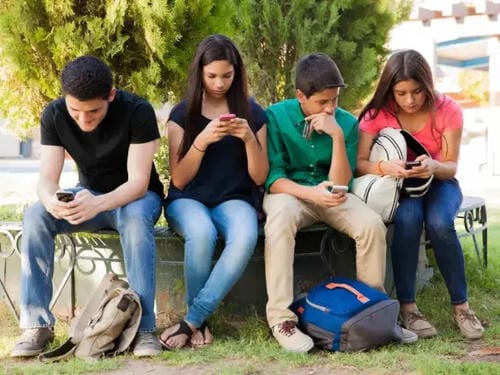
One of the most significant distinctions is the integration of digital technology into everyday life. Earlier generations encountered media through bounded formats—scheduled television, weekly newspapers, or limited computer access at school. Teenagers today inhabit a social world that is persistent, portable, and algorithmically curated. Social interactions extend beyond school halls and neighborhoods into online spaces that never shut down. Identity formation and peer comparison occur under constant visibility, with moments of experimentation and vulnerability documented and shared across platforms in ways that previous generations could never have imagined.
This shift has profound implications for how adolescence is experienced psychologically. Past generations faced peer pressure that was usually localized and ephemeral. Today’s teens navigate a world where social comparison is structural and systemic. Metrics such as likes, comments, followers, and views convert social standing into numeric indicators, implicitly linking peer approval to digital performance. Earlier adolescents measured themselves against classmates or cultural icons seen through mass media; contemporary teens gauge themselves against curated representations of peers, scaled to a global audience. The comparison pool is vast, idealized, and persistent.
At the same time, teenagers today grow up with heightened awareness of global issues that once remained abstract or distant. Climate change, political polarization, economic precarity, geopolitical conflict, and public health crises are persistent parts of daily information flows. Previous generations learned about these concerns through filtered sources; today’s teens encounter them in real time, often through emotionally charged content that blurs the line between information and affect. This early encounters with global uncertainty contribute to a sense that the future is unstable and contested, often beyond individual control.

Family structures and educational expectations have also shifted in ways that shape adolescent experience. Many parents today are more emotionally attentive and aware of psychological well-being than caregivers in past generations. This can provide crucial support, but it can also intensify performance pressures. Adolescents are expected to excel academically, build strong extracurricular profiles, develop social skills, and maintain emotional resilience, all at the same time. In contrast, earlier generations saw clearer transitions into adulthood through employment, marriage, or vocational roles. For today’s teens, adulthood often seems both more demanding and less defined, extending adolescence into an extended period of preparation rather than arrival.
Mental Health, Emotional Literacy, and the Language of Distress
One of the most frequently noted differences between today’s teenagers and earlier generations concerns mental health. Rates of reported anxiety, depression, and emotional distress among adolescents have risen markedly in many countries, prompting debate about whether young people are experiencing more distress or are simply more willing to articulate it. The answer likely lies in the interplay of both factors, shaped by cultural change rather than individual vulnerability alone.
Earlier generations often grew up in environments with constrained emotional expression. Mental health struggles were stigmatized, downplayed, or framed as personal weakness to be endured privately. Teenagers learned to suppress distress, lacking both the language and institutional support to describe what they felt. As a result, many struggles remained hidden, surfacing later in adulthood or absorbed into broader narratives of resilience and self-reliance.
Today’s cultural landscape increasingly recognizes mental health as central to well-being. Schools, media, and online communities offer language for discussing anxiety, burnout, trauma, and neurodiversity. This expanded emotional literacy allows adolescents to identify experiences that previous generations might have borne silently. From one perspective, this is progress: suffering is acknowledged rather than dismissed, and seeking help is normalized rather than stigmatized.
However, this shift also complicates how distress is understood. Constant exposure to mental health discourse can blur the line between normal developmental stress and clinical pathology. Adolescence has always involved emotional intensity and identity exploration. When such experiences are interpreted through clinical frameworks, teenagers may view distress as an enduring identity trait rather than a transient developmental phase. Earlier cohorts often framed hardship as something to overcome; today’s adolescents may experience distress as something intrinsic to their self-concept.

Social media plays a paradoxical role in this dynamic. On one hand, it offers community, peer support, and solidarity, reducing feelings of isolation. Teenagers can find networks that validate their experiences and normalize vulnerability. On the other hand, online spaces can amplify distress through contagion, comparison, and a performative economy of attention. Expressions of suffering may be rewarded with validation, creating subtle incentives to frame experiences in increasingly intense terms. This does not imply fabrication of pain, but it does suggest that the cultural economy of attention influences how pain is expressed, interpreted, and understood.
The relationship between mental health and achievement further distinguishes today’s teens. Academic and professional pathways are widely perceived as highly competitive, with less tolerance for missteps. Standardized testing, college admissions, and future employability are framed as high-stakes processes that begin earlier and leave little room for error. In previous generations, economic mobility seemed more attainable through diverse life paths. Today’s adolescents are acutely aware that mistakes can have long-term consequences, amplifying performance anxiety and fear of failure.
Importantly, teenagers today are not passive recipients of these pressures. Many demonstrate high levels of emotional insight, social awareness, and moral engagement. They are more likely than earlier generations to discuss consent, boundaries, mental health, and systemic inequality in sophisticated ways. This emotional and moral sophistication reflects both the challenges they face and the tools they have adopted. The difference is not one of inherent fragility, but of navigating a more complex psychological terrain.
Identity, Agency, and the Future-Oriented Self
Another defining difference between today’s teenagers and those of past generations concerns identity formation. For earlier cohorts, identity development was often guided by relatively stable social categories: class, gender roles, nationality, religion, or vocational paths. While these frameworks were not free of conflict, they offered clear reference points with which adolescents could situate themselves. Identity formation involved choosing among established paths rather than inventing entirely new ones.
Contemporary adolescents confront a more fluid identity landscape. Traditional categories coexist with a broader spectrum of gender expressions, cultural affiliations, and lifestyle choices. This plurality allows greater authenticity for those whose experiences were marginalized in the past. At the same time, it places a greater burden on the individual to define, articulate, and defend identity. Where past generations inherited identity frameworks, today’s teens often feel responsible for curating their own.

Digital contexts intensify this process by turning identity into something that must be displayed as well as lived. Digital profiles, posts, and histories become extensions of self that are archived indefinitely. Phases of experimentation that once faded with time can persist online. This permanence may discourage risk-taking and exploration that are characteristic of earlier adolescence, leading to heightened caution in self-expression.
Agency, too, is experienced differently across generations. Today’s teens are often both informed and constrained. They have unprecedented access to global information and platforms for expression, yet confront structural limitations—economic inequality, housing affordability, climate change, and political instability. Earlier generations, particularly in postwar contexts, often saw clearer connections between effort and opportunity, reinforcing narratives of personal agency. For many of today’s adolescents, the link between individual action and collective outcomes appears more tenuous.
This tension shapes how young people imagine the future. Whereas past generations often viewed adulthood as a stage of stability and opportunity, contemporary teens may approach it with ambivalence or concern. Milestones such as home ownership, financial independence, or secure employment feel less attainable, reframing adulthood as a continuation of uncertainty rather than its resolution. This future-oriented anxiety is generational, reflecting structural conditions rather than individual outlooks.
Yet it would be misleading to portray today’s teenagers solely through a lens of vulnerability or loss. They exhibit resilience, creativity, and critical awareness adapted to their historical moment. Many engage in activism, community organizing, and digital advocacy at scales that surpass previous generations’ opportunities. They navigate complex social dynamics, bridge online and offline worlds, and articulate ethical concerns on local and global stages. Their skepticism toward inherited systems often reflects informed critique rather than disengagement.
Ultimately, the differences between today’s teenagers and those of past generations are not best understood as declines or improvements, but as transformations. Every generation is shaped by its social context, and the current context is uniquely dynamic, interconnected, and emotionally demanding. Comparing generations reveals less about which cohort is stronger or weaker and more about how societal change redistributes psychological burdens, emotional tools, and expectations across time.
About the Author:
Alexandra Moore is a cultural sociologist and writer focused on youth, mental health, and social transformation. With over a decade of experience in research, education, and cultural journalism, she has published widely on adolescence, digital life, and emotional culture in magazines, academic forums, and mental health outlets across North America and Europe. Alexandra holds a master’s degree in sociology and works with nonprofits to translate research-based insights into public dialogue and cultural critique.
References:
[1] Twenge, J. M. (2017). Have smartphones destroyed a generation? The Atlantic.
[2] American Psychological Association. (2023). Stress in America: Teens. https://www.apa.org/news/press/releases/stress/teens
[3] World Health Organization. (2021). Adolescent mental health.
[4] Pew Research Center. (2020). On the cusp of adulthood and facing an uncertain future.
[5] Odgers, C. L., & Jensen, M. R. (2020). Annual Research Review: Adolescent mental health in the digital age. Journal of Child Psychology and Psychiatry.