Languages and Cultures Uphold Identity by Resisting Foreign Words Even Amid Global Exchange
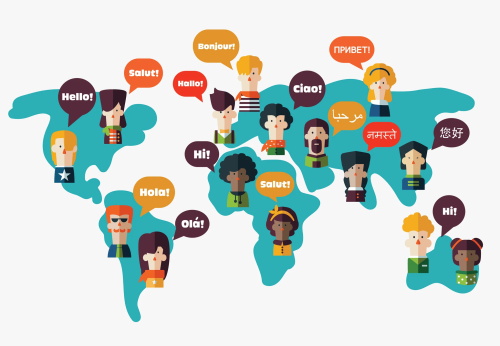
Language is often described as the vessel of culture—fluid, adaptive, and constantly reshaped through contact with others. In practice, however, the relationship between language and culture is far more complex. At the heart of this complexity lies an intriguing phenomenon: while some cultures readily absorb foreign vocabulary—especially that tied to new technologies or social trends—others seem to push back, adapting borrowed words in unexpected ways or resisting them altogether. This linguistic resilience reveals deep cultural priorities, ideological commitments, and identity-forming practices that aren’t always visible on the surface.
Linguistic borrowing is a well-documented outcome of cross-cultural contact. Words traverse borders with people, ideas, trade practices, and technologies; no natural language is entirely isolated from these forces. But linguistic adaptability does not automatically translate into cultural transformation. In many sociolinguistic contexts, foreign words don’t replace native ones wholesale, and their presence doesn’t ripple outward to shape broader cultural behaviors or values. This divergence between lexical exchange and cultural influence raises provocative questions: Why do some languages and communities resist foreign vocabulary? How do internal structures and identity frameworks filter foreign influence? And what does this resistance tell us about broader cultural dynamics?
To unpack these questions, it’s crucial to understand that not all languages are equally receptive to imported terms. For example, research on Mandarin Chinese highlights how the language’s writing system, grounded in ideographic characters, has historically resisted straightforward phonetic borrowing of foreign words. Chinese tends to favor native morphemes or meaning-based character combinations over direct transliterations, which are often excluded because they stumble against the culture’s long-standing graphic–semantic conventions. This exclusion reflects not merely structural quirks, but a purist ideology deeply embedded in linguistic practice that filters foreign influences at the word level rather than allowing them to permeate the language unchecked [1]. In contrast, languages with phonetic alphabets often incorporate foreign sounds and structures more easily, yet even then, speakers may selectively adapt external terms in ways that neutralize perceived foreignness.

The ideology of linguistic purism itself is a cultural phenomenon as much as a linguistic one. Across different regions and time periods, language communities have adopted prescriptive norms designed to preserve linguistic “purity” as a means of safeguarding cultural identity. Icelandic, for example, is famed for producing native equivalents to foreign terms rather than borrowing them, driven by an explicit policy of linguistic protectionism that is entwined with national self-definition and cultural continuity [2]. Similarly, movements to resist English lexical influence in French or other languages often stem from anxieties about cultural homogenization and perceived threats to linguistic heritage. These purist attitudes don't just affect vocabulary; they carry sociocultural meanings about belonging, heritage, and autonomy that can resonate far beyond the realm of phonology or lexicon.
What’s fascinating about linguistic resistance is that it does not imply cultural isolation. Instead, it illustrates selective engagement. Cultures that resist foreign vocabulary may still absorb foreign technologies, philosophies, and social practices, but they interpret and adapt these influences through indigenous conceptual frameworks. This selective adaptation often results in borrowed words being semantically altered, attenuated, or funneled into specific domains where they don’t destabilize the core linguistic system. For instance, even in cases where borrowed words enter everyday speech, they might be semantically naturalized in a way that aligns them with native categories, thereby insulating the broader cultural worldview from wholesale change.
Furthermore, sociolinguistic research reveals that not all borrowed forms survive equally within a language. In studies of loanword dynamics, researchers have mapped the “ecological” trajectories of imported terms—identifying categories ranging from extinct or critically endangered to stable and widely used. These trajectories hinge on factors such as communicative need, sociocultural value attached to the concept, and existing lexical ecosystem in the recipient language. Words that fill a genuine communicative gap, especially those that express new technologies or global phenomena, are more likely to be retained. But many other borrowed forms disappear or become marginal when there’s a strong cultural impetus to retain traditional vocabulary or patterns of expression [3].
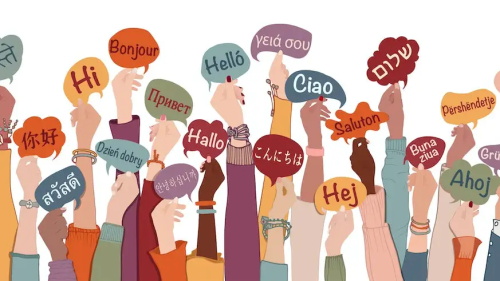
Even the notion of “loanwords” itself underscores a negotiation between linguistic form and cultural identity. Borrowed words can be adapted so thoroughly that their foreign origins become opaque, and speakers no longer perceive them as foreign. In other cases, lexical items remain visibly foreign but are compartmentalized into particular social registers or specialized fields—such as technology, fashion, or cuisine—without altering the foundational structure of the language. This compartmentalization reflects not a rejection of innovation but a calibrated approach to change, one that absorbs what is useful while maintaining cultural continuity.
In some communities, resistance to external words is strengthened by broader movements that link language with autonomy and self-determination. Indigenous language revitalization movements, for example, actively counter the colonial histories and ongoing pressures that have led to linguistic marginalization in many parts of the world. These movements emphasize not only the preservation of specific lexical items, but also the restoration of entire linguistic systems as central to cultural survival. By foregrounding indigenous languages against dominant languages’ influence, these initiatives highlight how linguistic resilience is woven into wider struggles for cultural and political recognition.
Perhaps the most compelling lesson from examining linguistic resistance is that words alone rarely drive cultural transformation. While vocabulary can act as a vector for ideas, beliefs, and practices, the deeper patterns of cultural change are shaped by institutional forces, social networks, and values that operate independently of lexical borrowing. A foreign term might enter a language and be in wide circulation, but its cultural impact depends on how it is understood, interpreted, and used within the community. A loanword does not carry with it the entire cultural apparatus of its source; rather, it is interpreted through the host culture’s lens. In this sense, borrowed words become mirrors that reflect the values and priorities of the borrowing community as much as those of the donor culture.

The resistance of certain linguistic communities to foreign words therefore illustrates a broader truth about culture itself: cultural exchange is always selective, negotiated, and contextual. It is not a monolithic flow from dominant to subordinate cultures, nor is it a simple process of assimilation. Instead, it is a dynamic interplay where language both shapes and is shaped by cultural identity, historical circumstance, and collective choices. When languages resist certain foreign elements—particularly lexical items—it tells us something profound about the cultural boundaries communities choose to preserve, the symbolic weight they attach to linguistic forms, and the strategies they deploy to sustain cultural continuity in an ever-interconnected world.
About the Author:
Marina K. Latham is a linguist and cultural theorist with over a decade of experience exploring language contact, identity, and the sociocultural implications of multilingualism. She holds a Ph.D. in Linguistic Anthropology and has conducted field research on lexical borrowing in East Asian and Indigenous language communities. Latham’s work has been published in academic journals and featured in public-facing platforms on language preservation and cultural resilience. Her interdisciplinary expertise bridges sociolinguistics, cultural studies, and anthropology, illuminating how languages evolve in response to complex historical and social forces.
References:
[1] Zhang, L. (2024). On the Chinese resistance to lexical borrowing: a writing-driven self-purification system. Humanities and Social Sciences Communications.
[2] Mo, R., & Xiao, H.-Z. (2024). Ecolinguistic dynamics of English loanwords in Chinese. Humanities and Social Sciences Communications.
[3] Wang, N., & Bai, W. (2024). Indigenous language revitalization movements: resistance against colonial linguistic domination. Communications in Humanities Research.