How Machine Learning and AI Reveal Cultural Patterns in Modern Society?
In the landscapes of psychology and social science, culture has always been a central yet complex variable shaping human behavior, cognition, and interaction. Traditional frameworks like Hofstede’s cultural dimensions have offered structured ways to understand cultural differences in values and behavior, such as individualism versus collectivism or attitudes toward hierarchy and uncertainty. These frameworks emerged from extensive surveys and factor analysis designed to quantify how societies differ from one another.
Today, machine learning (ML) and artificial intelligence (AI) are augmenting and, in some cases, redefining how researchers identify and analyze cultural patterns. Rather than relying solely on predefined theoretical constructs, ML enables a data-driven exploration of cultural phenomena, allowing researchers to observe patterns that might not emerge through classical approaches. For instance, in a study using machine learning to classify cultural membership from global survey data, algorithms were capable of identifying cultural distances and revealing nuanced differences between nations like the United States, China, and Japan, both in expected areas of divergence and in previously overlooked features. [1] This shift highlights a paradigm where computational models not only test hypotheses but generate new, empirically grounded insights about cultural psychology.
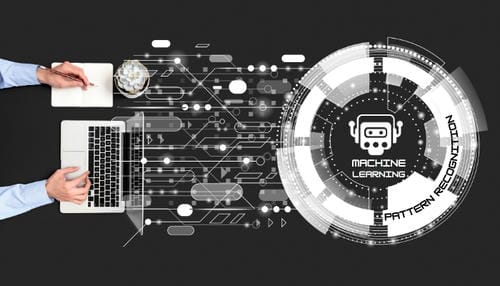
The advent of AI-driven cultural analysis is not confined to survey interpretation. Across digital platforms, natural language processing (NLP), sentiment analysis, and pattern recognition are being applied to vast corpora of text, including social media, historical archives, and multimedia content. These tools can reveal shifts in discourse, track emerging norms, and identify regional variations in language use or emotional expression. AI’s capacity to process and contextualize massive datasets accelerates our understanding of how cultural beliefs and narratives evolve over time, often revealing subtle societal shifts that would be invisible to human analysts due to scale.
However, this transition to ML-based cultural analysis also foregrounds important methodological considerations. Unlike traditional research grounded in human-generated hypotheses, ML models derive patterns based solely on statistical relationships in the data. This “pattern first” approach can uncover associations that lack clear causal interpretation or theoretical grounding. Researchers must therefore balance computational discovery with cultural and psychological expertise to ensure that findings are not merely artifacts of data structure but have substantive meaning within broader cultural contexts.
Cultural Values, AI Bias, and Society
While machine learning provides powerful tools for cultural pattern analysis, it also raises critical questions about cultural representation, bias, and embedded values in AI systems themselves. As AI models learn from datasets that reflect human behavior, they inevitably absorb the cultural assumptions embedded in those data. Recent research on generative AI demonstrates that when models are prompted in different languages—English versus Chinese, for instance—they exhibit distinct cultural tendencies in social orientation and cognitive style. In one such study, AI responses in Chinese reflected more interdependent social values and a holistic cognitive style, while responses in English tended toward independent and analytic orientations. [2]

These findings underscore that AI systems do not just generate neutral output; they reflect and transmit cultural tendencies present in the data used to train them.
This intrinsic cultural bias in AI has two major implications. First, it complicates how AI is used as an analytical tool. If a model’s outputs reflect latent cultural biases, researchers may inadvertently interpret algorithmic tendencies as genuine sociocultural patterns unless such bias is carefully accounted for. Second, when AI systems are embedded into social systems—such as education, hiring, healthcare, or public policy—their culturally influenced outputs can shape real-world outcomes, reinforcing certain cultural norms while marginalizing others. This challenge is especially pronounced in global contexts where systems trained on Western-centric datasets may misinterpret or misrepresent behaviors from non-Western cultures, leading to flawed inferences and potentially inequitable outcomes.
Trust and acceptance of AI in society can also vary significantly across cultural contexts. Experimental evidence shows that cultural dimensions such as power distance and masculinity affect how people ethically evaluate delegation of decision-making to AI-enabled information systems, with higher power distance correlating to more positive ethical evaluations. [3] Differences such as these remind us that cultural values do not simply shape human behavior independent of technology; they affect how people perceive, interact with, and adopt AI in everyday life.
Efforts to mitigate cultural bias in AI also extend into the realm of moral and ethical modeling. Some researchers argue that AI systems should be “culturally attuned” by learning from the value systems of specific communities—similar to how humans internalize cultural norms through observation and socialization. This approach, using techniques like inverse reinforcement learning, aims to imbue AI with values that resonate with the communities where it operates, rather than enforcing a universal or culturally neutral moral code.
Societal Impacts: AI, Culture, and Human Dynamics
Beyond research and theory, the intersection of AI and cultural analysis has tangible impacts on how people learn, communicate, and adapt socially. In educational settings, AI-mediated interactions—such as chatbot dialogues—have been shown to enhance intercultural communication competence among students by exposing learners to culturally nuanced discourse patterns. [4] This suggests that AI tools can contribute to social learning, helping individuals gain skills that are increasingly vital in a globally interconnected world.
At the community level, AI-driven pattern analysis is being used to understand social dynamics, including how norms spread, how cultural ecosystems evolve, and how collective identities are formed and reinforced. These insights are not limited to academia; marketers, policymakers, and content creators use cultural analytics to tailor products, messaging, and policies that resonate with specific cultural segments, illustrating the broad societal uptake of these technologies.
However, as these technologies permeate public and private spheres, ethical questions about data privacy, consent, and representation become paramount. Algorithmic culture—the idea that computational logic and big data influence not only how culture is analyzed but how it is experienced and produced—points to the reciprocal relationship between technology and societal norms. It is not merely that AI analyzes cultural data; algorithms actively participate in shaping cultural consumption patterns through recommendation systems, content curation, and digital interaction platforms.
Understanding culture through machine learning and AI also challenges long-standing assumptions in social science. Rather than viewing culture as static categories or fixed dimensions, the computational lens reveals fluid and dynamic patterns that shift across time and context. Researchers must therefore adopt interdisciplinary approaches that combine computational rigor with cultural, psychological, and anthropological insight to interpret machine-generated findings meaningfully.
In this ongoing evolution of cultural analysis, AI holds the promise of expanding our understanding of society’s most subtle patterns, but it also demands a reflective and responsible application. By acknowledging both the possibilities and limits of machine learning in cultural psychology, scholars and practitioners can better navigate the complex interplay between technology and the cultural forces that shape human life.
About the Author:
Alex Chen is a social technologist and cultural analyst specializing in how AI and machine learning illuminate human behavior and societal trends. With a background in computational social science and cross-cultural psychology, Alex has spent over a decade exploring how algorithms interpret, reflect, and shape culture in digital and real-world contexts. Their work bridges data-driven research with sociocultural insight, helping readers understand the complex ways technology and society co-evolve.
Sources:
[1]: PubMed. (2025). Machine Learning Culture: Cultural Membership Classification as an Exploratory Approach to Cross-Cultural Psychology
[2]: MIT Sloan School of Management. (2025). Generative AI’s hidden cultural tendencies
[3]: Parrish, J., & Saeed, K. (2025). Understanding the impact of culture on the teleological evaluation of delegation to artificial intelligence-enabled information systems.
[4]: Scientific Reports. (2025). AI utilization, enjoyment, trust and instructor competence as predictors of intercultural communication competence among Chinese students
Reference:
Cornell.(2023). Culturally-attuned moral machines: Implicit learning of human value systems by AI through inverse reinforcement learning.
Recommended for you