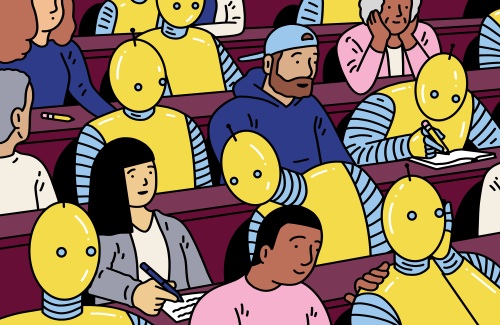
Artificial Intelligence Predicts and Influences Human Cultural Taste Patterns at Scale
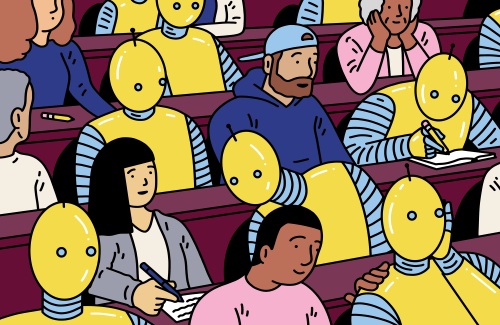
In recent years, a quiet revolution has been sweeping through the social sciences, humanities, and tech industries alike — one that challenges long-held assumptions about culture, creativity, and the ways in which human preferences can be mapped, understood, and even predicted. At the heart of this shift lies a deceptively simple idea: can computers, fueled by vast troves of raw data, begin not only to reflect but also to anticipate the tastes of individuals and societies? This question is far more than a technical curiosity; it illuminates deeper forces reshaping how culture is both generated and consumed in the digital era.
The Rise of Predictive Cultural Analytics
Cultural prediction through artificial intelligence (AI) sits at the intersection of algorithmic culture, machine learning, and what scholars call cultural analytics — the data-driven study of cultural artifacts at scale. At its core, cultural analytics embraces the computational analysis of large collections of texts, images, music, and other media to detect patterns that would be imperceptible to human researchers working alone. This approach stems from academic work that advocates for combining data science with humanistic inquiry to reveal broader cultural trends across time and space. By moving beyond the qualitative analysis of small samples to explore millions of artifacts simultaneously, computational models offer new avenues for modeling what “taste” looks like across audiences, genres, and demographic slices. In parallel, companies like Qloo have operationalized these ideas into commercial products that use machine learning to connect preferences in one cultural domain — say, music — with likely affinities in others, such as film, dining, or travel. Powered by billions of lifestyle data points and consumer behaviors, such platforms embody the practical application of predictive taste intelligence: they seek to forecast what a person is likely to enjoy across varied aspects of cultural life based on patterns extracted from comparable users and contexts.
How Algorithms Infer Taste
These systems operate by essentially performing correlation and inference at scale. The more data an AI ingests — whether streaming interactions with media platforms, purchase histories, social media activity, or other digital footprints — the more it can detect subtle associations between tastes that might elude individual human understanding. For instance, a user’s affinity for a particular musical style may statistically correlate with preferences for specific film genres or culinary tastes, allowing a predictive engine to map those connections and suggest new cultural experiences with surprising accuracy. From a technological standpoint, this is not “mind-reading” but rather pattern recognition on an unprecedented scale: algorithms do not understand taste in a human sense but interpolate likely affinities from high-dimensional data spaces. Such computational taste engines reflect a broader logic of algorithmic culture, where big data and algorithmic processes not only respond to cultural consumption but actively shape it by determining which artifacts are surfaced, recommended, or rendered visible to users in the first place.
Limits of Quantifying Human Experience
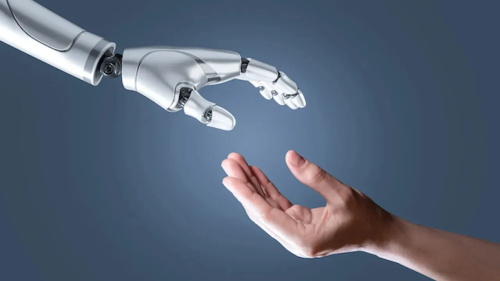
Yet the very strengths of AI in predictive taste modeling also raise profound questions about the nature of culture itself. Can statistical correlations really capture the richness of human aesthetic experience? Scholars of cultural analytics caution against overconfidence in computational methods that overlook context, subjectivity, and temporality — factors that have long been central to cultural inquiry but are not easily reducible to numeric representations. While machine learning excels at detecting patterns across large datasets, it may fail to account for the nuances that give rise to cultural meaning, such as emotional resonance, historical context, and the symbolic dimensions of art and taste that elude quantification. Furthermore, research in areas like music cognition suggests that prediction and creativity are deeply intertwined yet distinct processes. Models that simulate expectation and pattern recognition in music, for example, help explain how listeners anticipate musical events, yet they don’t fully account for why certain compositions resonate emotionally or culturally with specific audiences. In other words, predictive systems may approximate patterns of human behavior without necessarily grasping the conceptual and affective dimensions that give culture its depth.
Data Bias and Cultural Reflection
Another layer of complexity arises when we consider the origin of the data itself. AI learns from past human behavior, meaning that any prediction is inherently anchored in historical choices. This can make AI a powerful mirror of human culture but also one that reflects entrenched biases and prevailing norms. As some commentators have pointed out, algorithms do not generate aesthetic value independently; they echo the tastes and judgments embedded in their training data. Thus, while AI may appear to “predict” human preferences, it is ultimately constrained by the cultural landscape that has already been mapped by human activity. This introduces both epistemological and ethical concerns: if cultural prediction engines primarily amplify what is already popular or well represented in data, they risk narrowing the diversity of cultural expression and reinforcing mainstream norms at the expense of unique, unconventional, or emerging voices.
Creativity Beyond Prediction
This tension between prediction and creativity also manifests in discussions within computational creativity — a field dedicated to understanding and simulating aspects of human creativity through computational means. Although machines have been designed to generate texts, images, and music that mimic human creativity to varying degrees, these outputs are ultimately constrained by the patterns of existing human works on which they were trained. Computational creativity aims not only to emulate human creative processes but also to explore how machines can collaborate with humans to expand creative possibilities. It is this collaborative edge — where AI supports human ingenuity rather than replacing it — that some researchers view as the most promising frontier for culturally meaningful innovation.
Predicting Sensory Experience
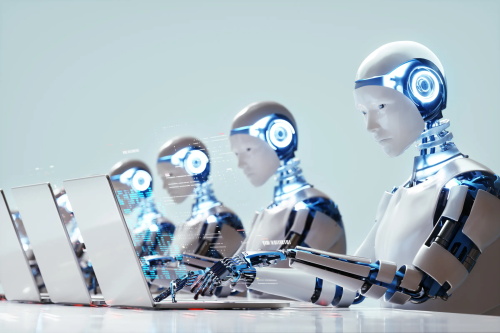
Beyond the arts and media, similar debates play out in domains such as sensory perception, where AI models are now being applied to predict individual taste sensations in food science. By integrating multimodal data (combining subjective human inputs with chemical and sensory information), researchers have demonstrated that algorithms can make more precise predictions about which foods individuals might prefer. Although this research is still in its early stages, it illustrates how computational models are starting to approximate aspects of human sensory experience that were once thought too subjective or complex for machines to tackle. These interdisciplinary efforts reveal both the potential and limitations of AI: while machines can uncover patterns and correlations at scales beyond human capacity, they do not experience taste, emotion, or cultural meaning in the way humans do.
Cultural Discovery and Algorithmic Exposure
In practical terms, predictive cultural systems have profound implications for how individuals discover media, food, fashion, and entertainment. Recommendation engines on streaming platforms, e-commerce sites, and social networks already influence the cultural artifacts that people encounter daily. By anticipating preferences, these systems can streamline discovery, making it easier for individuals to find content aligned with their interests. Yet there is a subtle flip side: when algorithms tailor cultural experiences too closely to past behavior, they risk creating echo chambers that limit exposure to novelty and diversity. This raises questions about autonomy and agency in cultural participation: to what extent are our preferences truly ours, and to what extent are they shaped by the systems designed to predict and serve them?
In summary, the rise of AI-driven taste prediction reflects a broader transformation in how culture is understood, analyzed, and mediated. These technologies offer new tools for exploring large-scale cultural patterns and anticipating individual preferences, but they also underscore the enduring complexity of human taste — a complexity that resists full capture by data alone. As computational models continue to evolve, the challenge for cultural scholars, technologists, and audiences alike will be to balance the efficiencies of prediction with a recognition of the human qualities that give culture its richness: context, creativity, and the unpredictable pleasures of surprise.
About the Author:
Nova Sinclair is a cultural technology writer and analyst whose work explores the intersections of artificial intelligence, creativity, and human experience. With over a decade of experience reporting on digital culture for outlets including Tech & Society, Culture Next, and The Data Review, Mercer has covered the evolution of media technologies from recommendation algorithms to generative AI systems. She holds an M.A. in Digital Humanities from the University of California, Berkeley, where her research focused on computational methods for cultural analysis. Mercer’s writing blends rigorous insight with a passion for understanding how emerging technologies reshape the way people create, consume, and connect.
References:
van Noord, N., Wevers, M., Blanke, T., Noordegraaf, J., & Worring, M. (2022). An analytics of culture: Modeling subjectivity, scalability, contextuality, and temporality. arXiv.
Tao, Y., Viberg, O., Baker, R. S., & Kizilcec, R. F. (2024). Cultural bias and cultural alignment of large language models. PNAS Nexus, 3(9), pgae346.
Understanding and predicting cross-cultural food preferences with online recipe images (2023). Information Processing & Management, 103443.
Ruckenstein, M. (2023). The feel of algorithms. University of California Press; on the social and emotional impact of algorithmic systems.