Collective Memory Shapes Future Anxieties and Social Identity

At the heart of contemporary sociocultural thought lies a powerful recognition: memory is not just an archive of past events stored in the recesses of personal minds, but a social construct actively maintained, shaped, and transformed within communities. Sociologist Maurice Halbwachs first articulated this idea nearly a century ago, arguing that memory is inherently collective—embedded in social frameworks and shared interactions rather than isolated inside individual brains. In this sense, “collective memory” refers to the shared narratives and remembrances that a group uses to define itself, trace continuity between its past and present, and orient itself toward potential futures. This process does not merely recount what has happened, it actively constructs meaning about who “we” are and who “we think we can be.” Collective memory thus acts as an intersection point between lived experience, social narrative, and the ongoing project of identity formation within a society.
The Foundations of Collective Memory and Identity
Importantly, we should conceptualize collective memory not as a static repository but as a dynamic negotiation among competing narratives. What a society chooses to remember—and what it chooses to forget—is shaped by cultural power structures, political agendas, and social institutions. These narratives are not neutral; they are constructed, maintained, and often contested in the realm of public discourse. They extend from official histories defined by state institutions and educational curricula to the more informal but equally powerful realms of family stories, local customs, and media representations. Because collective memory operates at the intersection of cognition and culture, it both reflects and refracts the social identities that individuals hold within their communities.

This anchoring of identity in shared memory means that debates over how history is interpreted inevitably become debates about the identity and future of a community. When national narratives are contested—for example, debates about colonial histories or the legacies of racial injustice—the dispute is not merely about historical facts; it is a negotiation over the collective self-concept of the group. The narratives that societies promote through textbooks, monuments, and commemorative rituals signal what is valued, what is marginalized, and what is feared. As such, collective memory is deeply political and inherently tied to how individuals and groups perceive themselves in relation to others.
Memory as a Source of Anxiety and Future Orientation
The ways groups remember their past have profound implications for how they imagine their future and the anxieties that accompany those visions. Anxiety, in psychological terms, is not simply a generalized fear but an anticipatory disturbance—a forward-looking apprehension about possible threats and uncertainties ahead. Unlike fear, which is typically a response to an immediate object of danger, anxiety resides in the realm of the unknown, engaging the imagination in perpetual speculation about what might come to pass. Within sociocultural contexts, this future-oriented anxiety is not divorced from the past; it is inseparable from the narratives that communities use to situate themselves historically.
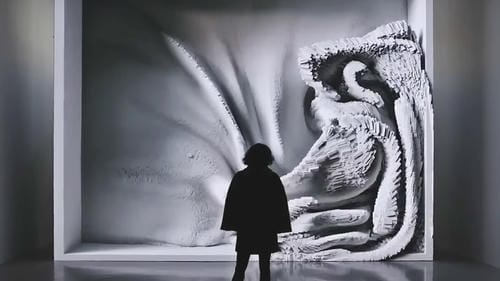
When collective memories are invoked—whether in moments of political upheaval, social crisis, or cultural debate—they often serve as reference points for envisioning potential futures. People do not simply recall events; they interpret them through narrative frameworks that shape expectations and guide predictions about what outcomes are possible or probable. In a polarized political environment, for instance, competing memories of historical triumphs or grievances become scripts for imagining divergent futures. These scripts can generate anxiety by emphasizing threats that echo historical traumas or by presenting scenarios in which cherished values and identities are jeopardized.
This socio-cognitive linkage between memory and future thought has been conceptualized in recent psychological research on collective mental time travel. Just as individuals draw on personal memories to imagine future possibilities, groups draw on collectively construed pasts to envision collective futures. These imagined futures are mediated by cultural narratives and symbolic resources embedded in social contexts. Far from being linear or singular, the relationship between past and future is complex, multilinear, and shaped by current social identities and cultural worldviews. Thus, future anxieties are not simply projections of abstract uncertainty; they are anchored in the cultural legacies that groups carry, often manifesting as collective angst—a concern for the viability and continuity of the group itself.
This connection meshes with social psychological studies of collective emotions. Collective angst, for example, is defined as group-based worry about the vitality and continuity of one’s in-group. When people perceive discontinuities between their group’s historical achievements and present conditions, or when they anticipate that future trajectories may undermine their collective status, anxiety intensifies. Memories of past injustices, defeats, or triumphs thus become activated in ways that shape emotional responses tied to future anticipation. The same set of collective memories can either amplify or soothe anxiety depending on the existing cultural frameworks and narratives that mediate future thinking.
The media also plays a central role in this interplay between memory and anxiety. In contemporary societies, media narratives proliferate and circulate multiple versions of collective memory, often emphasizing polarized or sensationalized interpretations of history. Such narratives do not merely reflect existing anxieties but can produce anxieties by framing past events in ways that heighten the perception of future threats. Whether through social media, news reportage, or political rhetoric, these mediated memories shape the lens through which communities view their futures, sometimes intensifying fear of uncertainty and magnifying divisions within and between groups.
Ultimately, collective memory does more than connect past and present: it acts as a cultural compass guiding how societies anticipate and emotionally respond to the future. The narratives that are foregrounded, contested, or suppressed in public discourse reveal underlying anxieties about identity continuity and the imagined threats that may lie ahead. These dynamics are not unique to any single culture or political context; they play out across societies grappling with questions about national identity, cultural heritage, and the prospects of social cohesion or fragmentation in times of rapid change.
About the Author:
Jordan Rivers is a cultural sociologist and writer whose research focuses on the intersections of memory, identity, and collective emotion in contemporary society. With a Ph.D. in Sociology from the University of Chicago and over a decade of experience studying narrative dynamics in political and media contexts, Jordan has published widely in both academic journals and public-facing outlets. Their work bridges social theory and lived cultural phenomena, exploring how shared pasts shape collective futures in an era of rapid social change. Jordan currently teaches cultural studies at a major research university and contributes regularly to interdisciplinary forums on memory and social psychology.
References:
Halbwachs, M. (1992). On Collective Memory. University of Chicago Press.
Merck, A., Topçu, B., & Hirst, W. (2016). Collective mental time travel and future thinking. Journal of Experimental Psychology.
Smeekes, A., Jetten, J., et al. (2018). Collective angst and nostalgia: Emotional functions of collective memory. Group Processes & Intergroup Relations.
Szpunar, K. K., Szpunar, M., & Schacter, D. (2017). Episodic future thinking and collective memory. Psychological Review.
Wohl, M., Squires, E., & Caouette, J. (2012). Collective angst and intergroup relations. Journal of Personality and Social Psychology.