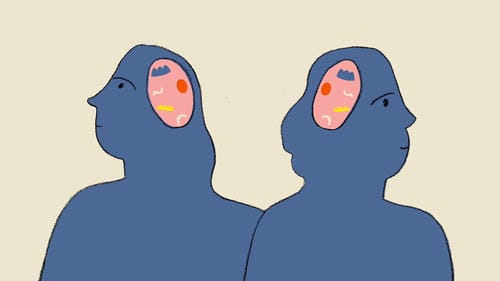
Viral Trends Reflect the Psychological Dynamics of Human Interaction

In the age of smartphones, social platforms are not merely channels for information; they are mirrors reflecting how human cognition and social dynamics shape what we see, engage with, and ultimately share. The lightning-fast spread of memes, challenges, and hashtag movements isn’t happenstance—it is rooted in the deepest mechanisms of the human mind and the structure of our social networks. At its core, virality combines emotional resonance, cognitive shortcuts, and social motivations to create phenomena that propagate through digital cultures with astonishing speed. Research into the psychology of virality shows that the same forces that once fueled oral gossip in small communities now underlie why certain posts, ideas, and media grips a global audience online.
Central to understanding virality is recognizing that the human brain evolved to prioritise information that matters socially. In a crowded news feed, content that evokes strong emotional responses—whether awe, anger, humour, or surprise—stands out from the background noise and prompts engagement. High-arousal emotional content, in particular, increases the likelihood of sharing because it activates neural circuits associated with reward and social bonding. This linkage between emotion and spread has been documented in multiple studies showing that content with strong emotional hooks triggers more interaction and dissemination than neutral, informational posts. [1]
Beyond emotion, relatability plays a significant role. People are more inclined to share posts that resonate with their own experiences or reflect aspects of their identity and values. When a meme, video, or hashtag encapsulates something familiar—like universal frustrations, cultural jokes, or collective experiences—it becomes a social signal that connects individuals, reinforcing shared norms and identities. This social currency effect means that sharing isn’t just about distributing content; it is about expressing oneself and signalling belonging to a larger group.

Underlying these psychological triggers is a paradox: widely shared content is often not widely liked, a phenomenon observed in research on information spread. The “paradox of virality” suggests that some content goes viral not because it is universally appreciated, but because it taps into mechanisms that amplify engagement—such as controversy, novelty, or emotional intensity—even if the sentiment isn’t positive. [2]
Cognitive Biases, Networks, and Social Dynamics
Virality doesn’t occur in a vacuum. It emerges from interactions between psychological tendencies and the structural features of networks. One cognitive bias relevant to this process is the majority illusion, where individuals overestimate how common a belief or behaviour is in the broader population because it is highly visible within their own network. In social media environments—where a small number of influencers or highly connected nodes can amplify certain posts—this illusion can lead people to think that a trend reflects wider consensus than it actually does, driving further engagement and spreading.
Another prevalent psychological effect involves social proof, the heuristic where people take cues from others’ behaviour to determine what is desirable or normative. On social platforms, early signals of popularity—likes, shares, comments—serve as endorsement cues that encourage others to join in, creating a snowball effect. This dynamic is closely tied to the fear of missing out (FOMO), where users feel compelled to engage with trending content lest they be left out of the cultural conversation.

Cognitive biases like the false consensus effect also influence how individuals interpret trends. This bias leads people to overestimate the degree to which others share their opinions or interests, reinforcing the perception that a viral phenomenon reflects widespread agreement when it may be driven by a particular subsection of users. In turn, these biases shape both the production and consumption of content, influencing what becomes salient and shareable.
Network structure itself matters as well. Classic social science experiments, such as the “small world” findings associated with Stanley Milgram’s research, showed that social networks are tightly interconnected, meaning information can traverse large distances through relatively few intermediaries. Online, algorithms intensify this effect by recommending content that has already attracted engagement, further compressing degrees of separation between users and accelerating spread.
Moreover, visual features like memorability can make content inherently more shareable. Recent computational research suggests that images with distinctive, memorable features—those that are easier for human memory to encode—tend to generate higher engagement, demonstrating that cognitive processing at the perceptual level can influence virality. [3]
In addition to these cognitive and network factors, the format and context of content matter. Simplicity and clarity are critical because social media users often make rapid decisions about what to engage with. Content that can be quickly understood, consumed, and reacted to has a distinct advantage in reaching viral thresholds. Platforms themselves play a role: algorithms prioritise content that generates early engagement, pushing it into more feeds and amplifying its reach. Timing—linking posts to cultural moments, trending conversations, or platform usage patterns—can further enhance spread by situating content in moments of heightened attention. [4]

Ultimately, virality reflects a dynamic interplay between individual psychology and collective behaviour. Humans are wired to share experiences that strengthen social bonds, express identity, and navigate social landscapes. At the same time, the architecture of digital platforms, with their feedback loops and algorithmic incentives, transforms these individual impulses into large-scale patterns of information diffusion. In this sense, virality is not merely a technological phenomenon but a deeply human one—shaped by cognition, emotion, and the social contexts in which we live and interact.
About the Author:
Dr. Simone Alvarez is a social psychologist and digital culture researcher who studies how human cognition and social dynamics shape online behavior. With expertise in network psychology, virality, and the cognitive mechanisms behind digital trends, Dr. Alvarez explores why certain ideas, memes, and movements capture widespread attention and how these patterns reflect deeper social and psychological processes.
Sources:
[1]: Karnavati University. (2025). The psychology behind viral content.
[2]: Cprnell University (2025). Image memorability enhances social media virality (arXiv preprint).
[3]: ScienceDirect (2025). The psychology of virality. Trends in Cognitive Sciences, 29(10).
[4]: 123 Internet Agency. (2025). The psychology behind viral social media content.
Reference:
The Word 360. (2025). The psychology of viral content: Explained.