The Emotional Thermostat Explains How Collective Anxiety Drives Modern Social Responses
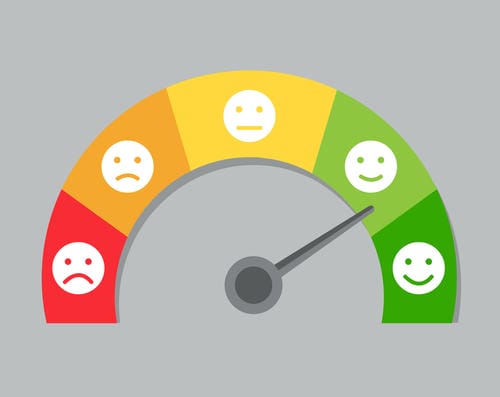
Human beings are not only individual processors of emotion; we are also collective beings whose emotional lives are deeply intertwined with those around us. A growing body of research in social psychology and behavioral science demonstrates that emotions are not confined to solitary experience but spread through groups via unconscious and conscious processes often described as emotional contagion — the tendency for emotions observed in others to be mirrored within oneself and across social networks. Emotional contagion occurs through subtle cues such as facial expressions, tone of voice, and behavioral mimicry, and can scale from dyadic interactions to entire communities, influencing group moods and behavior patterns. Under this paradigm, the affective state of a collective does not simply mirror the sum of individual emotional reactions; rather, it emerges from dynamic interactions between individuals, shaped by context, communication patterns, and social identity.
Understanding the Mechanics of Shared Emotional Regulation
Ancient sociological concepts like Émile Durkheim’s collective effervescence — moments when groups synchronously share emotions leading to heightened unity — align with contemporary findings that collective emotional states can dramatically shift group behavior, cohesion, and responses to external events. Research on collective emotions after crises such as terrorist attacks illustrates that people who engage in shared emotional expression — for instance, through social media — often show increased social bonding and prosocial behavior, suggesting that the collective emotional state may serve adaptive functions that reinforce social resilience. Yet this synchrony works in two directions: group emotional alignment can facilitate resilience and unity, but it can also create feedback loops that amplify fear and anxiety beyond what any single individual might experience on their own.
In the modern digital era, social media platforms provide fertile ground for the rapid dissemination of emotional cues. Negative emotions, such as anxiety or fear, can spread quickly via posts, comments, and shares, influencing large populations with astonishing speed. During the COVID-19 pandemic, large-scale analysis of social media data revealed a pronounced increase in anxiety-related terms across countries following outbreak onset, demonstrating how global collective emotional responses can be triggered by shared exposure to a common threat. Computational models of online communities also show that collective anxiety is influenced by topic salience and the nature of discourse — with conflicting information and lack of clear knowledge contributing to higher levels of group anxiety. When anxiety becomes pervasive within a community, it effectively sets a psychological “thermostat” that dictates the emotional baseline from which reactions to new information or events occur.

This emotional thermostat is not merely metaphorical; it functions as a distributed regulatory mechanism that emerges through interaction and shared attention. When a society or group perceives a threat — whether real, exaggerated, or ambiguous — the collective emotional setting shifts toward defensive and anxiety-based responses. Unlike internal physiological regulation where homeostasis ensures stability, the collective emotional thermostat can oscillate widely when feedback loops of transmission and interpretation dominate social discourse. In these cases, intense collective anxiety doesn’t just reflect individual fear responses — it shapes how groups interpret uncertainty, prioritize information, and behave in concert.
When Anxiety Becomes Mass Hysteria
At its most extreme, the emotional thermostat can spark phenomena historically described as mass hysteria or collective psychogenic illness. These events occur when anxiety spreads across a community or population, inducing synchronized emotional and sometimes physical reactions in the absence of an identifiable external cause. While historical cases like the Dancing Plague of 1518 are dramatic outliers by today’s standards, modern instances of mass hysteria continue to occur, often fueled by social pressure, media narratives, and collective fear dynamics.
Mass hysteria episodes can illustrate just how powerful shared expectation and fear can become. In contexts where group identity and emotion amplify one another, members of a community can come to perceive threats that elicit emotional responses disconnected from objective risk. Research on emotional contagion demonstrates that fear and anxiety, when shared intensely among large populations, can create feedback loops where individual emotional regulation is overwhelmed by the collective mood. In classic and modern mass hysteria examples, this process plays out visibly: symptoms spread like a psychological contagion, people unconsciously mirror the affective states of those around them, and the community’s emotional thermostat bars movement back toward a calmer baseline without external intervention or change in context.
Importantly, the rise of digital communication technologies has complicated this dynamic. Unlike historical settings where emotional contagion was limited by physical proximity, online networks diminish spatial constraints and accelerate emotional transmission. Studies show that emotional contagion online does not differentiate well between positive and negative affect; negative emotions such as fear and anger often spread more rapidly due to network structures that favor weak ties and broad dissemination of sensational content. In such settings, the emotional thermostat of a digital community can rise sharply in response to news cycles, trending topics, and inflammatory posts, contributing to collective anxiety that may not reflect the actual severity of events.
This does not imply that collective anxiety is irrational in all cases — human groups have evolved to be sensitive to social and environmental threat cues because early detection of danger was advantageous for survival. However, the mechanisms that once provided adaptive benefits now operate within vastly more complex informational ecosystems. Misinformation, polarized discourse, and algorithmically driven content distribution can destabilize the emotional thermostat, causing anxiety responses to escalate disproportionally to actual risk. In consequence, public discourse, consumer behaviors, policy debates, and political polarization often become entangled with collective emotional states, making it difficult to assess situations clearly and make well-reasoned decisions.
Understanding mass hysteria and collective anxiety through the lens of a shared emotional thermostat highlights a key insight: collective emotional responses are not simply aggregates of individual emotions but are emergent states shaped by communication, meaning-making, and social processes. What a group collectively attends to, discusses, and emotionally reacts to boundaries the setting of this thermostat. Groups with tightly woven communication networks and high affective synchrony may have thermostats that tightly track anxiety triggers, whereas more heterogeneous or fragmented communities may show varied emotional responses that resist synchronization.
The Role of Social Structures and Communication in Emotional Regulation
The emotional thermostat concept also underscores how social structures and cultural contexts mediate collective emotional regulation. Social identity — whether rooted in nationality, profession, ideology, or community affiliation — influences which emotional cues individuals prioritize and how they interpret them. Group-based emotions arise when individuals appraise events through the lens of a shared identity, meaning that two groups exposed to the same information may experience very different collective emotional states based on identity framing alone. These frames serve as interpretive filters that affect not only how individuals feel but how they perceive and propagate emotions within their groups.

Traditional sociological theories, such as crowd psychology, posited that individuals in groups lose autonomy and emotions drive irrational behavior. Contemporary research complicates this narrative by showing that group emotions can involve complex cognitive and reflective processes as well as unconscious mimicry. Thus, collective emotional regulation is not a simple surrender to mob impulses but involves negotiation between individual emotional regulation capacities, group norms, and the communication environment. Groups that promote open dialogue and critical reflection may moderate peaks in collective anxiety, effectively lowering their emotional thermostat by integrating diverse viewpoints and encouraging reflective processing.
In contrast, environments where echo chambers and affective polarization dominate may trap communities in narrow emotional states. In online contexts, affective polarization — where emotional reactions become more extreme due to shared animosities and homogenous networks — can heighten collective anxiety even when contradictory information is available. Influencers and thought leaders within these networks play an outsized role; their articulation of topics and emotional framing can either escalate or mitigate collective anxiety levels. Computational analyses of topic-based communities show that higher proportions of credible information sources and influencers correlate with more stable collective emotional states, while conflicting signals and a dearth of reliable voices amplify anxiety fluctuations.
The interdependence between communication dynamics and emotional regulation becomes especially salient in times of crisis. During global events like pandemics, economic downturns, or political unrest, collective anxiety often spikes as people seek information and reassurance from both formal authorities and peer networks. The digital age’s flattened communication hierarchies mean that formal expertise competes with peer-to-peer narratives for influence over the collective emotional thermostat. Studies analyzing emotional expression on social media during the COVID-19 outbreak revealed persistent waves of anxiety-related messaging that mirrored public uncertainty and government responses. These findings suggest that emotional states are interactive phenomena that emerge from feedback between individual expression and shared discourse.
Thus, the emotional thermostat of a population can be thought of as a distributed regulatory system shaped by affective contagion, identity frameworks, information flow, and communal meaning-making. It operates across physical and digital spaces and reflects the interplay between individual psychological processes and collective social dynamics. Grasping how collective anxiety arises, escalates, and abates requires attending to both the mechanisms of emotional transmission and the structural contexts that enable or constrain synchrony.
About the Author:
Samara V. Rhodes is a cultural sociologist and contributing editor specializing in collective behavior and emotional dynamics in contemporary society. With over fifteen years of research and writing experience, she has published extensively on topics including emotional contagion, social networks, and group psychology in outlets such as Psychological Science Review and Culture Currents Journal. Rhodes holds a Ph.D. in sociology from Northwestern University, where her dissertation explored the intersection of digital media and mass emotional regulation. As a sought-after speaker and consultant, she advises academic and industry partners on understanding and navigating the emotional undercurrents that shape public discourse and group decision-making. Her work blends rigorous social science research with accessible analysis for a broad audience.
References:
Lu, D., & Hong, D. (2022). Emotional Contagion: Influencing Factors of Social Media Users’ Negative Emotional Communication During the COVID-19 Pandemic. Frontiers in Psychology.
Emotion contagion in agent-based simulations of crowds: a systematic review. (2023). Autonomous Agents and Multi-Agent Systems. Springer Nature Link.
Effects of Social Anxiety on Emotional Mimicry and Contagion. (2017). Journal of Nonverbal Behavior. Springer Nature Link. .
Collective emotions during the COVID-19 outbreak. (2023). PubMed.
Influential Factors on Collective Anxiety of Online Topic-Based Communities. PMC.
Fan, R., Xu, K., & Zhao, J. (2016). Higher contagion and weaker ties mean anger spreads faster than joy.