Internet Culture and Meme Psychology Shape How People Think and Process Information
In the digital landscape of the 21st century, internet memes are far more than funny pictures or fleeting jokes. They have become potent psychological agents that shape how individuals perceive the world, think about themselves, and interact with society. From a memetic perspective, the concept of a “meme” originated with evolutionary biologist Richard Dawkins in 1976, who defined memes as units of cultural information that spread from mind to mind in a way analogous to genes replicating biological traits. What distinguishes internet memes from earlier cultural transmission is not the fundamental mechanism of imitation, but the speed, scale, and visibility with which memes now propagate across digital networks. As a result, memes comprise an important psychological force within internet culture, influencing cognition, emotion, and behavior in ways that are often subtle but cumulatively profound. [1]
Memes as Psychological Agents in Digital Culture
Psychologically, memes engage mental processes such as imitation, emotional resonance, and social identification. Research into cognitive and motivational factors reveals that the sharing and reception of memes depend on personal relatability, comprehensibility, and humor—features that tap directly into how individuals’ brains process social information. In studies focusing on meme appraisal, relatability often predicts whether a meme is considered apt or funny, and this, in turn, is strongly tied to individuals’ willingness to share it. Political memes illustrate this dynamic particularly clearly: congruity between a meme’s message and a person’s existing viewpoints significantly increases its spread within ideological communities.
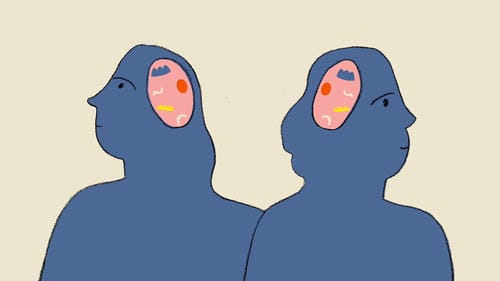
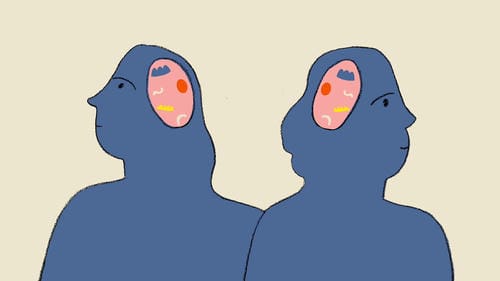
This cognitive linkage is not incidental. The very structure of a meme—the combination of imagery and concise textual framing—activates neural circuits associated with imitation and emotional processing. According to psychological analysis, memes convey nonverbal social cues that traditional text often cannot capture, enabling users to rapidly decode and internalize social meaning. These responses are grounded in evolved cognitive functions that allow humans to learn from others’ behavior, a process that historically facilitated survival but now operates in the digital realm to propagate cultural patterns at extraordinary speed. [2] Such rapid transmission, under conditions of limited context and heightened emotional engagement, creates fertile ground for psychological effects that extend well beyond individual memes themselves.

At the population level, the mechanisms by which memes spread resemble models of cultural epidemiology: ideas or representations replicate through cognitive exchange in ways that mirror disease transmission within a population. Cultural epidemiologists emphasize the role of mental representations and repeated exposure in stabilizing certain memes within collective consciousness. When memes achieve cultural endurance, they do more than entertain—they become embedded frameworks of thought that shape norms, expectations, and even social conduct.
Norms, Identity, and the Cognitive Ecology of Memes
Internet culture, infused with memetic communication, fundamentally alters the ecology of social norms and cognitive habits. Memes operate as miniature cultural units that do not simply reflect existing norms; they actively participate in constructing and reinforcing them. Through repeated exposure within social networks, certain memes become shared codes that define group membership and delineate acceptable behavior. They create implicit conventions about what is humorous, what is legitimate commentary, and what is socially rewarded. In this respect, memes function as both mirrors and molders of social values. [3]
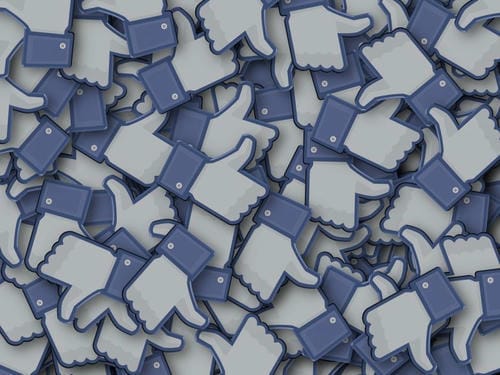
The role of memes in shaping norms is most visible in movements that have leveraged memetic communication to catalyze social awareness and mobilize collective action. Hashtags, slogans, and viral images rapidly distill complex sociopolitical issues into accessible symbols that can be transmitted across platforms and communities. Yet the very qualities that make memes effective at mobilizing attention — brevity, emotional resonance, and cognitive simplicity — can also obscure nuance and encourage rigid dichotomies in thinking. Simplification can lead to polarization, reinforcing pre-existing biases and contributing to an echo chamber effect in which users repeatedly encounter ideas that align with their own views. These patterns of exposure can constrain cognitive flexibility, making alternative perspectives less visible and reducing opportunities for integrative reflection.
Internet culture’s influence on identity formation operates through similar psychological pathways. Online spaces curated around memetic exchange invite users to participate in shared symbolic environments, constructing identities that are often both performative and socially influenced. By expressing themselves with memes, users not only signal group affiliation but internalize the norms, humor styles, and interpretive habits of those communities. In effect, the process of identity formation becomes intertwined with a memetic literacy: individuals learn to interpret, remix, and reproduce cultural content in ways that align their self-presentation with the expectations of the networked spaces they inhabit.
This memetic shaping of identity and norms has implications for the stability of cultural values. Some analyses suggest that the interaction between memes and broader societal forces produces dynamic shifts in social norms — sometimes accelerating innovation and cultural evolution, and at others reinforcing divisions and entrenching stereotypes. Observations of meme-driven cultural phenomena illustrate how these digital artifacts can act as catalysts for both creative expression and defensive reactions, influencing the collective mindset in ways that span the ideological spectrum. [4]
Cognitive Impacts: Processing, Attention, and Belief
The cognitive impacts of meme culture extend into how individuals process information within the digital environment. Because memes favor condensed presentation and emotional engagement, they align with the attention economy of social media platforms, conditioning users to prioritize rapid recognition and immediate affective response over nuanced deliberation. This dynamic shapes cognitive habits by emphasizing quick pattern recognition and heuristic processing — cognitive shortcuts that are efficient for rapid decision-making but often bypass critical evaluation.
Research on meme sharing highlights that comprehension and humor play essential roles in making content memorable and shareable. This interplay between cognitive processing and affective response reinforces certain patterns of thought: ideas that are easily processed and emotionally engaging are more likely to propagate, while more complex or ambivalent inputs struggle to gain traction. The emotional resonance of memes functions as a form of selection pressure, giving certain representations an advantage in cultural transmission based on their ability to evoke strong reactions.
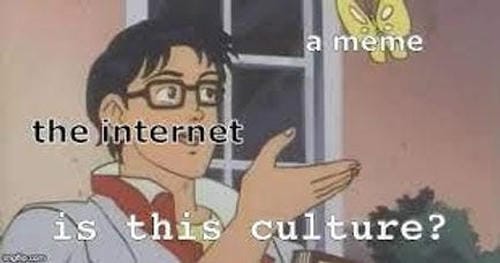
Beyond immediate cognitive effects, the dominance of memetic communication contributes to broader patterns in how people form beliefs and interpret social information. Exposure to memes that confirm pre-existing beliefs strengthens cognitive biases, such as confirmation bias, through repetition and reinforcement. This pattern is further amplified by algorithms on social media platforms that prioritize content likely to generate engagement, often based on emotional charge rather than informational depth. Over time, such algorithmic curation subtly shapes the cognitive environment people inhabit, narrowing the range of ideas they encounter and reinforcing polarized worldviews.
In addition to cognitive framing, memes can also produce psycho-physiological responses, particularly when they convey stereotype-laden or emotionally provocative content. Studies suggest that exposure to certain meme formats can trigger affective reactions that influence mood and cognition, particularly among younger generations who have grown up immersed in digital culture. These responses may include both adaptive social learning and maladaptive patterns, such as reinforcing negative stereotypes and internalizing social stressors.
About the Author:
Dr. Anika Rao is a psychologist and digital culture researcher who explores how internet memes and online media shape cognition, emotion, and social behavior. Drawing on cultural psychology, social cognition, and network analysis, Dr. Rao examines how digital trends influence identity formation, social norms, and information processing in connected societies.
Sources:
[1]: TherapyTips.org. (2025). A psychologist explains meme reflexes. (TherapyTips.org article.)
[2]: Bergland, C. (2024). What memes reveal about our brains. Psychology Today.
[3]: Common Sense World. (2025). Memetic psychology: The influence of internet culture on thinking. (Medium article.)
[4]: ResearchGate. (2025). Memes vs normies: Shaping the culture of the digital age. (ResearchGate preprint.)
References:
Wong, E. F., & Holyoak, K. J. (2021). Cognitive and motivational factors driving sharing of internet memes. Memory & Cognition, 49(5).
Giorgi, G. (2021, August 21). Memes and identity. Meme Studies Research Network.
Lamba, P. S., & Jain, N. (2025). Psycho‑physiological impact of virtual non‑verbal communication on Gen Z workforce: A study of memes. Acta Psychologica, 254.