How AI Is Becoming a Cultural Medium?

The way humans use language has always been shaped by the technologies that carry it — from clay tablets, scrolls, and codices to print and radio — each medium has subtly altered how we think, speak, and imagine one another. Now with the advent of artificial intelligence that speaks, the frontier of linguistic exchange is shifting again. Unlike earlier media that merely transmitted written or recorded language, contemporary voice-enabled AI — whether embedded in smartphones, virtual assistants, or autonomous conversational agents — introduces a new cultural medium that blends linguistic performance with sociotechnical agency. This medium is not merely a functional tool; it is also an emerging cultural space where voices carry identity, expectation, and influence, and where the question of who speaks first — and who gets heard — becomes a matter of cultural power.
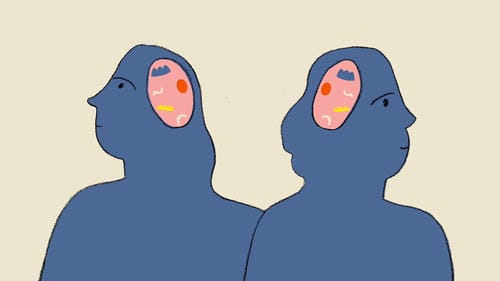
To understand this shift, we must start with the fundamentally interactive nature of voice AI. Written texts and static recordings convey language in one direction, inviting interpretation but rarely sustaining real-time interaction. In contrast, voice-centric AI technologies engage users in dynamic, dialogic exchange. Recent sociolinguistic research points to the potential for these AI voices to shape human speech patterns through processes akin to linguistic accommodation and entrainment — phenomena where conversational partners naturally adjust their vocal pitch, pace, or syntax to mirror one another during interaction. In human-to-human contexts this alignment reinforces social bonds; when it emerges between a person and an AI, it suggests that synthetic voices might contribute to changes in how people articulate themselves and how they perceive conversational norms.
This possibility matters because voice is not merely sound. Linguistic anthropology and voice studies have long shown that speech carries social information — regional accent, gender inflection, age cues, and cultural styles are all embedded within vocal delivery. In mediated contexts, sounds influence how listeners interpret identity and status; in voice AI, these same cues are selectively designed, curated, or even imposed by developers, meaning that artificial voices may reflect decisions about cultural norms and expectations rather than the full diversity of human expression. Studies on digital exclusion and accent bias in automated speech systems highlight how synthetic voices often perform better with dominant language varieties, reinforcing existing linguistic privilege and underrepresenting minority vocal identities. In such cases, the cultural power encoded in voice AI might privilege certain ways of speaking — an unseen but potent force shaping norms of intelligibility and authority.
As users increasingly treat AI voices as social actors, questions about cultural meaning deepen. Human-computer interaction studies show that people can attribute credibility, personality traits, and even social presence to synthesized voices, sometimes implicitly responding to them as if they were human interlocutors.

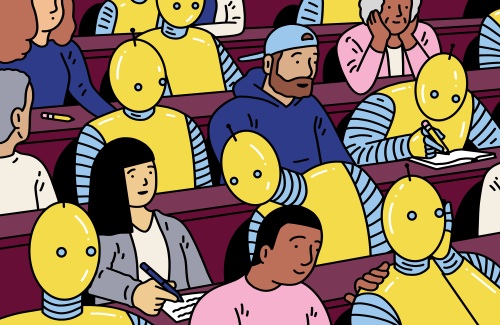
This echoes earlier research on the ELIZA effect, where even rudimentary conversational programs were perceived as intelligent and empathetic simply by virtue of engaging in dialogic exchange. With modern voice AI much more sophisticated, the tendency to assign personhood and communicative agency to machines has real implications for how language functions within society. Users may unconsciously adapt their communicative strategies to align with the patterns projected by AI voices — a transformational shift in which the boundary between human and machine linguistics becomes blurred.
The cultural influence of voice AI also extends to how societies perceive trustworthiness and authority. Experimental work on voice assistant accents reveals that accent and delivery style can significantly influence perceived credibility — a British English voice-AI, for example, may be judged more reliable by some users than an American English counterpart. When synthetic voices shape credibility judgments, they are not neutral conduits of information but cultural actors with rhetorical force. In public spheres where trust and persuasion are central — be it news dissemination, customer service, or political messaging — the cultural imprint of synthetic voices carries weight. If certain vocal features are more trusted than others, whether due to historical stereotypes, prestige dialects, or engineered design choices, then AI could effectively shape public discourse by privileging specific linguistic cues and marginalizing others.
At the same time, voice AI does not merely reflect existing linguistic power structures; it participates in reshaping them. Interactional studies on the domestication of conversational agents show that users adapt not only to the constraints of AI speech recognition systems but also embed these technologies into everyday communicative practices. In this co-evolutionary process, users may adjust the way they frame questions or express urgency, politeness, or emotion in ways that align with the machine’s expected input patterns. Simultaneously, devices may become personalized through learning algorithms that shape their responses to particular users. The result is a feedback loop where human speech adapts in response to AI, and AI models adjust according to human speech — a linguistic domestication where the culture of voice itself is redistributed across social and technological domains.
One of the most profound cultural questions raised by voice AI is power: who decides which voices are heard, how they sound, and what they represent? Design choices — from gendered voice defaults to accent ranges, intonation styles, and emotional expressivity — are not arbitrary; they carry cultural assumptions that may reinforce or challenge societal norms. Research into cultural bias in language models shows that many AI systems default to values and linguistic patterns associated with dominant English-speaking cultures, often at the expense of global diversity. Without intentional inclusion of varied linguistic and cultural voices, AI could deepen existing marginalizations, shaping not just conversation dynamics but broader cultural narratives about whose ways of speaking are standard or desirable.

Beyond linguistic content, the mere act of engaging vocally with a machine can alter societal patterns of communication. Studies on politeness and speech rate in synthetic systems show that AI voices adopt social nuances — slower delivery for politeness, for example — that can reinforce human conversational norms. In other words, voice AI can model not just vocabulary but conversational etiquette, norms of turn-taking, and subtleties of interpersonal exchange. As these systems become integrated into education, healthcare, commerce, and entertainment, their linguistic patterns could subtly propagate social conventions across populations, acting as distributed vectors of cultural norms.
While the full cultural impact of voice AI is still emerging, the evidence points to a medium that does more than speak — it participates in the shaping of culture. Much like radio broadcasting once reshaped dialect usage and standardization, and print reshaped literacy and cognition, voice AI may influence not only how we speak but how we think about speech, authority, and identity. The question of who speaks first in this landscape is not merely about technical precedence but about cultural agency: which voices are amplified, which are minimized, and how these choices shape the rhythms of everyday life. In interrogating the cultural frontier of voice interfaces, we must therefore recognize voice AI not simply as a tool but as an active medium of linguistic and cultural transformation.
About the Author:
Alexis Calder is an independent cultural technologist and writer whose work explores the intersections of language, technology, and social power. With a Ph.D. in Media and Cultural Studies and experience in interdisciplinary research on digital communication, she has published widely on the sociocultural implications of emerging technologies. Her recent projects examine anthropomorphism in human-AI interaction, the sociolinguistics of synthetic speech, and cultural bias in language models. A frequent contributor to academic journals and culture magazines, Calder has also worked as a consultant for technology ethics initiatives and spoken at international forums on how AI reshapes human communication and cultural norms. Her expertise blends linguistic anthropology, media theory, and technology studies, offering nuanced perspectives on how digital systems refract human identity and expression.
References:
Szekely, E., Miniota, J., & Hejná, M. (2025). Will AI shape the way we speak? The emerging sociolinguistic influence of synthetic voices (Proceedings of the 15th International Workshop on Spoken Dialogue Systems Technology). Association for Computational Linguistics.
Petricini, T. (2025). The power of language: framing AI as an assistant, collaborator, or transformative force in cultural discourse. AI & Society.
Michel, S., et al. (2025). Examining Accent Bias and Digital Exclusion in Synthetic AI Voice Services. arXiv.
Pycha, A., & Zellou, G. (2024). The influence of accent and device usage on perceived credibility during interactions with voice-AI assistants. Frontiers in Computer Science.
Pycha & Zellou (2024). The influence of accent and device usage on perceived credibility… Frontiers in Computer Science.
Hector, T. (2025). Joint journeys: the linguistic domestication of smart speakers and their users in interaction. AI & Society.
Tao, Y., et al. (2023). Cultural Bias and Cultural Alignment of Large Language Models. arXiv.
Do AI Voices Follow Social Nuances? The Case of Politeness and Speech Rate (2026). Computers in Human Behavior.