Cultural Identity Will Evolve Through Artificial Intelligence
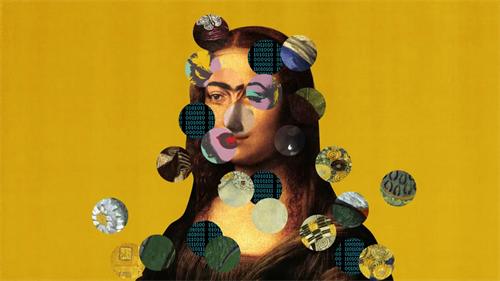
In the early decades of the 21st century, the global proliferation of artificial intelligence (AI) has shifted from a technological novelty to a profound social force influencing how people live, communicate, learn, and even imagine themselves. These shifts have not occurred in a vacuum. Cultural identity—long defined as the shared meanings, languages, symbols, narratives, and values that bind communities together—now intersects with AI systems in ways that both amplify and challenge traditional models of identity formation. To understand the future of cultural identity in an AI-mediated society, it is essential to grasp how AI technologies operate not only as tools but as cultural artifacts that embed and transmit values, biases, and ways of knowing.
Cultural Identity Meets Machine Intelligence
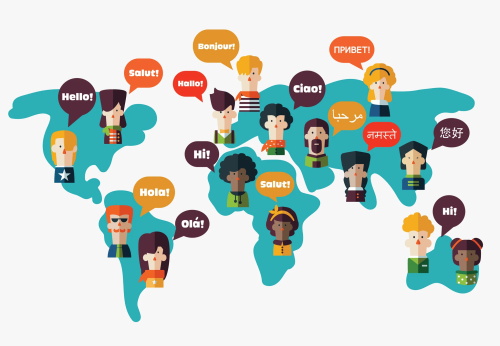
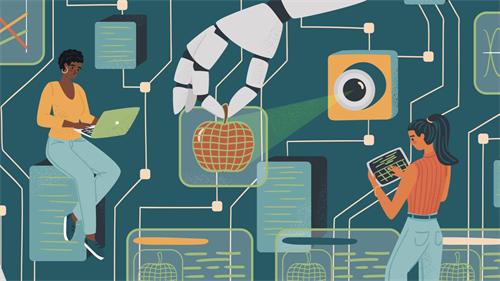
Scholars argue that technology and culture are deeply intertwined: technology does not merely reflect society but actively shapes the conditions of meaning-making and social interaction. AI’s role in cultural transmission lies in its capacity to process, translate, and generate language, visuals, and behaviors across contexts previously mediated by human agents. In doing so, AI systems are increasingly involved in intercultural communication, sometimes facilitating understanding across linguistic and geographical boundaries. For instance, AI-driven translation and multimodal communication technologies can enable richer engagement with cultural artifacts by making complex cultural expressions more accessible to diverse audiences. These tools can enhance empathy and recognition across cultures, allowing individuals to perceive and respond to cultural nuance that was previously inaccessible or marginalized in mainstream media and education. In such scenarios, AI functions as an amplifier of cultural exchange, potentially strengthening global cultural resiliency rather than diminishing it.
Yet this integration is not universally positive. AI systems are designed by human teams working within specific cultural frameworks, and the datasets they learn from often privilege dominant languages, worldviews, and historical narratives. Without conscious intervention, AI may inadvertently perpetuate cultural hierarchies by normalizing particular interpretations of culture while sidelining others. For example, the representation of architectural and social contexts by certain generative AI tools has raised concerns about the homogenization of cultural diversity and the reinforcement of power relationships that marginalize minority perspectives. These dynamics illustrate that AI does not merely “translate” culture; it participates in constructing cultural meaning in ways that can either support or undermine cultural diversity and equity.
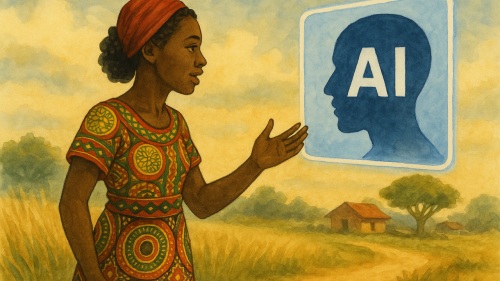
The idea that cultural identity itself can become mediated through algorithmic logic is not just theoretical. The concept of algorithmic culture explains how computational processes—such as recommendation engines, generative models, and data analytics—alter the way culture is experienced and understood. These algorithms affect everything from what media we see to how cultural narratives are amplified, often without transparency or critical awareness among users. When these systems drive cultural visibility, they shape cultural norms and identities by selecting which voices are heard and which are rendered invisible. In this sense, AI transforms cultural ecosystems, affecting whether individuals feel seen within a cultural narrative or excluded from it.
Cultural responses to AI are also shaped by deeply rooted social orientations. Research suggests that individuals from individualistic cultural contexts may perceive AI as external to the self, potentially seeing it as a threat to autonomy or uniqueness, whereas those from collectivist contexts may be more inclined to integrate AI as a collaborative extension of shared identity. These culturally dependent responses are central to understanding how AI might be embraced or resisted across different communities. As AI systems become integral to education, healthcare, entertainment, and governance, they will increasingly interact with culturally shaped expectations about autonomy, trust, and identity, reinforcing the idea that cultural framing influences AI adoption as much as technological capability does.
In sum, the nexus of cultural identity and AI invites us to rethink both concepts. Cultural identity is no longer solely preserved through oral traditions, community rituals, or linguistic inheritance; it is now shaped through digital artifacts, mediated interactions, and algorithmically curated experiences. These emergent forms disrupt conventional boundaries of community and self, challenging individuals and societies to navigate hybrid spaces where cultural authenticity and technological mediation coexist.
Identity, Power, and Possibility
As AI systems become more embedded in everyday life, questions about ethical use, inclusivity, and cultural sovereignty gain prominence. AI’s influence on cultural identity will not be a passive byproduct of technological advancement but a field of active negotiation between people, communities, and the institutions that govern digital infrastructures. At the core of this negotiation is the question of power: who gets to decide which cultural expressions are amplified, preserved, or erased by AI? If AI training data reflect existing cultural hegemony—favoring dominant languages and narratives—the risk is that digital systems could reinforce historical inequalities in representation and cultural capital. To prevent cultural homogenization, there must be intentional efforts to diversify the cultural data that train AI and policies that support cultural equity in algorithmic systems.
Efforts to address these tensions are already underway in academic, governmental, and community spaces. Initiatives aimed at preserving linguistic diversity, revitalizing endangered cultural practices, and documenting oral traditions leverage AI as a tool for cultural conservation rather than cultural replacement. When AI tools are designed collaboratively with communities—especially those historically marginalized—they can serve as extensions of cultural agency rather than instruments of cultural dominance. Examples include AI-assisted language preservation projects that document and teach Indigenous languages, interactive archival systems that enable global audiences to explore cultural heritage, and AI systems that can generate culturally contextualized stories and artwork informed by local aesthetic traditions.
Nevertheless, the design and governance of AI systems require more than technical solutionism; they demand a culturally sensitive framework that integrates ethical, epistemic, and anthropological perspectives. Interdisciplinary engagement—drawing from cultural studies, anthropology, sociology, and computer science—can help map how AI reshapes identity narratives and which cultural practices are at stake. This intersectional approach acknowledges that culture is not monolithic but complex and contested, influenced by historical legacies, power relations, and evolving social imaginaries.
The notion of preserving cultural identity in an AI-mediated future is not about resisting technological change; rather, it is about channeling innovation toward human flourishing in culturally meaningful ways. By foregrounding cultural values, community participation, and equity in AI development, it becomes possible to envision a future in which digital mediation enhances cultural expression rather than constrains it. This requires continuous dialogue across sectors to establish design principles and policy frameworks that safeguard cultural diversity while promoting shared human dignity in an increasingly automated world.
As society progresses into the era of pervasive AI, cultural identity will continue to evolve—not as a fixed inheritance from the past, but as a living, negotiated practice that incorporates tradition, innovation, and embodied human experience. In this evolving landscape, cultural identity is not simply preserved; it is continually reimagined through collective engagement with technologies that extend human capability and cultural reach.
About the Author:
Valeria Noor is a cultural theorist and technology critic whose work explores the intersections of AI, identity, and social change. She holds a Ph.D. in Cultural Studies from the University of California and has published extensively on digital culture, algorithmic representation, and intercultural communication. Valeria has consulted for UNESCO on digital heritage initiatives and contributed to interdisciplinary research projects focused on AI governance and cultural preservation. Her writing appears in both scholarly journals and mainstream outlets that examine how emerging technologies shape human values and societal narratives.
References:
Alsaleh, A. (2024). The impact of technological advancement on culture and society. Scientific Reports.
Campo-Ruiz, I. (2025). Artificial intelligence may affect diversity: architecture and cultural context reflected through ChatGPT, Midjourney, and Google Maps. Humanities and Social Sciences Communications.
Francesca Tabor. (2024). AI’s influence on culture: Shaping the future of expression and society.
AI for Community: Preserving Culture and Tradition. (2025). Routledge.
Recommended for you